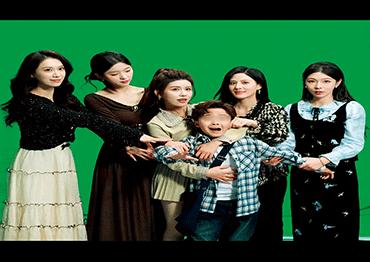
Hanghang, a 9-year-old child performer, wearing a blue plaid shirt, his hair teased into curls by the set's hairdresser, stands before five young women in their 20s. According to the storyline, these women were the character's betrothed. Hanghang was directed to act in a lustful way as if he was sexually attracted to all of them: his eyes were suggestive and he drooled over the five women.
Hanghang's character is an adult Taoist priest who stopped growing at age 10. Upon turning 24, his master tells him he must go down the mountain to save his life by finding five fiancées, all played by adult actors. On screen, Hanghang makes flirtatious expressions toward these "long-legged beauties."
None of the adults around him felt the scene was inappropriate, and Hanghang Hcarried on, already a veteran performer of several years.
As the micro-drama industry has boomed, child-oriented micro-dramas have carved out a dominant niche. According to a report by the Chinese Academy of Cyberspace Studies, the market share of micro-dramas featuring minors skyrocketed from less than 5 percent in 2024 to 22 percent in the first half of 2025, making it the fastest-growing segment in the industry. The genre climbed to seventh place in overall market popularity, the report said. Not all micro-dramas featuring children involve adult themes, but many do.
This has now attracted attention from film regulators and legislators, who want to close the legal gaps that allow the exploitation of child actors by the industry and by parents or guardians who permit long hours in age-inappropriate roles.
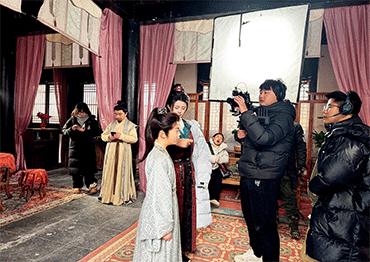
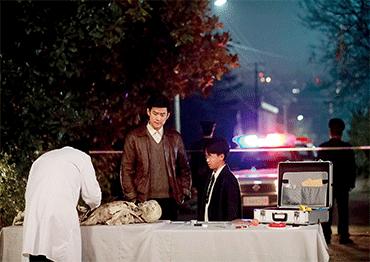
In micro-drama studios across China, child actors play roles like tycoons, brides and detectives as they perform adult-themed scripts far beyond their comprehension. This exploitation undermines their physical and mental health. "When children are required to perform adult-themed plots, everyone except these innocent kids knows what they are acting. They don't understand what they're performing" Qin Lin, a micro-drama screenwriter, told NewsChina.
Hanghang's mother, Li Li, said she knows her son suffered as he was drenched in a simulated rainstorm, water pouring all over him as they shot a scene at 11 pm on an autumn night at Hengdian World Studios, one of China's biggest film studios located in Dongyang, Zhejiang Province. Wearing only a T-shirt, Hanghang shivered as he cried, obeying the director's orders.
Li wrapped her son in a towel and got him dry clothes, a hairdryer and body warmer patches when the scene ended. She said it hurt her to watch. "I could feel how much pain he was in when all that water kept hitting him," she said, adding that becoming a professional actor takes enduring harsh conditions when required.
Li signed her son up as a micro-drama actor. She used to own a photography studio, and Hanghang had been a model for her studio when he was younger. Li herself had an unfulfilled dream of becoming an actress, so she steered her child toward acting after the micro-drama industry took off in 2022.
Shooting micro-dramas is grueling. Some crews, in order to cut costs, might shoot 100 episodes in five days, Li said. Hanghang once worked from 4 am one morning to 5 am the next day. When he was done, he was only allowed to sleep for two or three hours before being called to makeup again.
Ruirui, a 10-year-old boy from Hunan Province, has acted in micro-dramas since 2021. It was on a film set in Hengdian that our reporter saw him perform as a child detective in a costume drama. Ruirui's mother, Qiu Xia, told NewsChina that staying up late filming was the norm for her son.
The boy looked thin and relatively short, compared to his peers. Qiu said one time when Ruirui was filming a night scene, she fell asleep on set. When she woke up, it was already 4 am, but her son was under the lights delivering his lines. "At that moment, I felt so guilty," Qiu said.
Li told our reporter that only a few celebrity child actors can demand an eight-hour workday. Most child actors in micro-dramas have no choice but to endure exhausting shoot schedules.
Over the past four years, Hanghang has spent half of his time on sets and half at school. He has already shot dozens of micro-dramas, playing the lead in many. He can earn 3,000 to 4,000 yuan (US$440-586) per day. If he has lots of acting work, he might only spend a week every month at school. On shooting days, he is lucky to sleep for six hours.
Parents of child actors claim to be conflicted over their child's workload, on one hand feeling distressed, but also believing it necessary for their children to endure hardship if it can lead to a professional acting career or becoming a celebrity.
"If you keep hesitating, you'll surely miss lots of chances. Then you can't go far in this industry," Li told NewsChina.
"I just want to take his heart out - is there any problem with that? He's just a piece of trash, isn't he?" is a line Hanghang delivered while playing a villain. His roles can be full of violence.
Li is not troubled. "These lines are scripted. Whether they're playing a hero or a villain, an actor must serve the role," Li said.
Diao Lulu, a maker of child-oriented micro-dramas, told NewsChina that children initially played only supporting roles. But around 2024, as industry competition intensified, creators began casting children as protagonists in order to broaden their audiences.
As child-related plots were relatively limited, a new narrative became popular: body swap and time travel stories in the manner of Freaky Friday or Big, allowing for adult themes such as love, revenge and political intrigue.
Hanghang told NewsChina that he felt uncomfortable when he started acting in adult-oriented plots. "I felt some of the expressions and movements seemed wrong, and I was embarrassed in the beginning. But later on, after I filmed more, I gradually got used to the content," Hanghang said.
Qin Lin, a screenwriter of microdramas, told our reporter that many plots contain storylines that involve child abuse: a little girl forcedly married into a wealthy family as a child bride, an orphan boy constantly abused by his uncle, a mother locking her son in a refrigerator as punishment.
Ruirui has also filmed dramas with inappropriate plots and lines. Once he played a boy who supported his father's extramarital affair and helped force his mom out of the family. He had to deliver lots of lines that humiliated his own mother.
In his previous production, Ruirui performed a complicated character who suffered from bipolar disorder, depression, ADHD, Tourette's syndrome and claustrophobia. Ruirui told NewsChina that he did not understand these conditions, so he searched for information on his mobile phone and imitated the symptoms based on written descriptions.
Some child actors, after spending long periods immersed in adult roles, may begin to take them off set.
Diao Lulu once worked with a child actor named Tongtong, who spent most of his time filming micro-dramas. He either performed a constantly angry, domineering male lead or a character who is bullied. Diao noticed that Tongtong gradually failed to separate himself from his roles. His temperament became irritable, and he would suddenly lose his temper and yell at the crew.
Another child actor Diao worked with had to be an "ancient ancestor," a character who looks young but is actually thousands of years old and immensely powerful. His parents told Diao that when he went back to school, he still carried himself with an air of superiority, sometimes telling classmates, "Watch out, or I'll wipe out your whole family." Feeling guilty and regretful, the parents concluded that their child should not act in micro-dramas anymore, according to Diao.
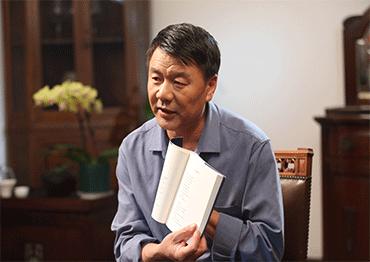
Zhang Jing, a professor at the School of Drama, Film and Television at the Communication University of China in Beijing, believes that children under the age of 6 cannot clearly distinguish fiction from reality. Having them participate in performances too early can easily lead to cognitive confusion and hinder their normal psychological development.
"Asking a child to play the heir of a domineering CEO or a cute cupid who helps mom and dad fall in love means that, from the child actor's perspective, they often don't fully understand what they are acting. They might come to see the adult world as chaotic and messed up, and as they grow older, they could struggle with handling relationships," Zhang told NewsChina.
In addition, stage parents often push their children too far.
Diao Lulu has interacted with many parents of child actors. He believes there are two main reasons they push their children to be cast in micro-dramas: either they harbor unfulfilled dreams of stardom and want to live vicariously through their children, or they rely on them financially. A child actor can easily earn more than a parent if they make several thousand yuan per day. These parents act as both guardians and agents, and may be reluctant to say no to inappropriate content or grueling schedules when they expect more money or fame for their child.
It is not only young boys who are forced into inappropriate roles.
In January 2026, a micro-drama called Forced to Marry the Living Hell King in Place of Her Lucky Sister, the Prime Minister's Family Fortune was Completely Ruined sparked intense controversy as soon as it was released.
The plot involved a 7-year-old girl who was forced to marry into a general's household in place of her sister, then giving birth at age 15. The drama features an 11-year-old actress partnered with an adult male actor as a married couple. It includes several intimate scenes, which triggered widespread public outrage. The drama was removed from platforms on January 13.
On January 8, 2026, the Department of Network Audio-visual Program Management of China's National Radio and Television Administration (NRTA) issued a notice on the management of child-related micro-dramas. It said child-centered micro-dramas should not be too "adult-like" or "too entertainment-oriented." The NTRA added that child actors must not overwork or be cast in violent, thrilling or overly complex emotional scenes that are beyond their mental capacity. The rules prohibit the promotion of childhood fame and said the notion that looks are important should not be promoted.
After the notice, many micro-drama productions involving children were scrapped. On March 10, Hongguo, one of China's biggest micro-drama platforms, announced that in February, the platform had removed or requested modifications for 160 micro-dramas containing negative depictions of children.
Li Li said that according to WeChat casting groups, demand for child actors has significantly decreased. The release of the micro-drama in which Hanghang played the Taoist priest with five fiancées has been postponed indefinitely. Li suspects that the drama will no longer be approved for broadcast. Diao Lulu also observed that a number of child-oriented drama projects have been canceled.
Zhang Yuxia, a member of the Shanghai Municipal Committee of the Chinese People's Political Consultative Conference (CPPCC), submitted a proposal during this year's local annual two sessions of legislative and political advisory bodies in Shanghai in February for regulations specifically targeting microdramas involving minors.
These new rules should clarify the criteria for adultification, strictly limit filming hours and intensity, and prohibit scenes involving violence, horror or emotional entanglements that exceed a child's physical and mental capacity. For parents who neglect their guardianship duties and turn their children into tools for profit, regulatory authorities should provide guidance and education, or even impose legal penalties.
Currently, existing Chinese laws contain provisions to protect the rights of underage actors. The Law on the Protection of Minors states that it is illegal to organize minors to perform or engage in activities that harm their physical or mental health. If filming short dramas causes a child to miss out on compulsory education, or if a child's physical or mental health is damaged after filming, employers and parents may face legal penalties in serious cases.
Nevertheless, China does not have specific laws and regulations targeting underage actors. In this regard, legislation in the US can be referenced. The California Child Actor's Bill, also known as the Coogan Act named after child actor Jackie Coogan, was designed to safeguard the rights of child performers and protect them from exploitation and abuse.
Enacted in 1939, the law strictly limits the maximum daily and weekly working hours for child actors and legally protects their right to time off. It also requires that for dangerous stunts or emotionally intense scenes, productions must assign a child welfare officer or psychological consultant to ensure their protection during filming. In addition, at least 15 percent of earnings must be placed in a special trust account, called a "Coogan account," which cannot be accessed until the child turns 18, preventing parents from using the money arbitrarily. A child actor's contract must be approved by a state court, rather than being signed only by a parent on their child's behalf.
He Hong, a micro-drama researcher and director of the Online Literature Center of the China Writers Association, stressed the necessity of establishing special legislation to protect the rights of underage actors. Such laws, he said, would provide an effective constraint mechanism for all parties involved.
But legal development takes time. In the meantime, protection may start with the practical measures. Zhang Yuxia suggests that all micro-dramas involving minors should undergo filing and approval by provincial-level or higher broadcasting authorities. The complete script and actor information should be submitted to regulators for review before filming begins, followed by a dual review by authorities and platforms after completion.

 Old Version