For students, the certainty of the integrated model comes with a trade-off. Some students who receive targeted vocational training at school struggle to adapt to more academic learning when they go to university.
Wang Zhao, who attended vocational school and now majors in automation at a university in Jiangsu Province, told NewsChina that she is disadvantaged because she did not learn physics and chemistry, as her studies were more skills-based. It means she has to catch up now. While they have lower assessment requirements, some students still fail assignments, and universities have to offer remedial courses.
Other students say they lack sufficient training in basic subjects, like math and English, which means they are disadvantaged at university and in job applications.
"Compared to students who go to university after they take the gaokao, I felt like I was always on the backfoot, whether in my studies or finding a job," a student who asked for anonymity told NewsChina.
Rao Pinhua, a teacher from Shanghai University of Engineering Science (SUES), told NewsChina that students in the integration program do worse in courses like math and engineering mechanics, and the gap in competence becomes more apparent in the final-year project stage.
Several interviewed analysts said they noticed there is still not enough integration of courses between vocational schools and universities in course design. Sometimes they just patch previous courses together.
Some educators and students question the value of the program because the employment market could have radically changed during the seven years they study.
Li Xiaoran, who studied preschool education in a vocational-to-undergraduate program at a Shanghai university, found it hard to find a good job in a kindergarten when she graduated this year. Seven years ago, the major was one of the country's most popular because demand for kindergarten teachers far exceeded supply. But now that China's birth rate is plummeting, there are fewer positions. She told NewsChina that most students who studied her major have yet to find a job that matches their qualifications.
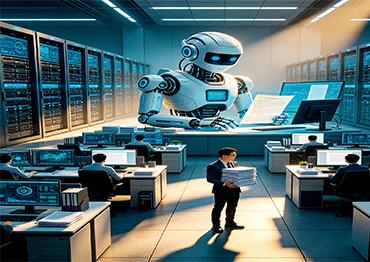
Even popular engineering and science majors no longer guarantee a career. A teacher from a Guangdong-based vocational school told NewsChina that the school started enrolling students for computer science in 2025 with high admission score requirements. But now the fast development of AI is eating into computer jobs, so when the students graduate, there will likely be fewer opportunities.
This year, Shanghai University of Engineering Science stopped enrolling students into its automotive service engineering major and changed it to intelligent vehicle engineering.
Students are locked into the major they choose when they are still in their teens, as unlike regular university students, they are not allowed to switch partway through.
Kuang Ying, a professor at the school of vocational and adult education at East China Normal University in Shanghai, told NewsChina that for these students, changing a major is limited not only by a school's resources but also whether they can transfer their credits and what they learned to another major. "The design needs to be improved," Kuang said.
Lin Kesong, director of the School of Vocational and Adult Education at Southwest University, noted that majors in this program should be continually updated and reflect sectors that have stable market demand for employees. He suggested institutions should be cautious about offering courses that might be affected by changes in population structure, policy change or market fluctuations. The courses should be adjusted when employment trends change, Lin said.
To enhance integration, SUES built a joint teaching research and supervision system with its partner vocational school. It provides guidance for the school on what basic courses it should include in its curriculum, and on how to increase the level of academic difficulty. It also sends teachers to the vocational school when needed.
Some educators worry that current assessment practices in universities are still far too theory-driven. Lin Kesong called for prudence in spreading the program before standards that distinguish it from traditional undergraduate education are established. "Otherwise, the vocational part of the education program will be diluted," he said.
Local industry needs should be considered, Lin believes, before the program is expanded. Shanghai and Guangdong Province need more skilled professionals in high-tech industries, so they need to build a stable source of talent, but this will not be necessary everywhere, he said.
Interviewed analysts suggest parents exercise caution when choosing a program. If they do not thoroughly understand what the program entails, or where their child's interests lie, setting a major at 15 is probably too early for some.
Gaining an employment advantage depends on the local industrial system, Li Daokui said. Students need to pick the right city, the right course, and understand the long-term prospects of industries. "AI is developing rapidly and will reshape countless jobs. The skills you spent years perfecting may soon be replaced, so they need to keep a close watch on AI and embodied robotics when they choose," he said.
"Many families are rushing into this integrated program with the same fervor they once had for key high schools, creating a whole new kind of competitive frenzy. That's exactly the opposite of what the policy was supposed to achieve," Kuang said. "If they choose this program just to avoid the gaokao and have no interest in their chosen major, these seven years of study will be torturous."
 Old Version