Old Version
Life

Picked on After Class

Parents are increasingly turning to complaint hotlines over classroom disputes. But teachers say they are weaponizing the system, and the growing fear of being reported is changing discipline, classroom dynamics and even children’s education

By Liu Ziyan and Wu Jin Updated Sept.1

It began as a livestream discussion between a parent and teacher on school bullying. Within weeks, it had turned into formal allegations against a university associate professor, and a nationwide debate. 

Controversy erupted following a livestream held in March on short-video platform Douyin, when host Shen Yifei, an associate professor at Fudan University's School of Sociology in Shanghai, had a disagreement with a mother seeking advice over an incident involving her child at school. 
Calling in to Shen's regular livestream, the mother said her child was treated unfairly after she shared snacks with classmates who did not return the courtesy, and she also had a minor physical altercation with a classmate. 

Shen said what she described did not constitute school bullying and advised the mother not to encourage her child to focus too much on "minor conflicts." 

Their disagreement quickly escalated. The mother filed multiple complaints with Fudan University, accusing Shen of "privacy violations" and "neglect of duty." The parent demanded a public apology and that Fudan take disciplinary action, despite Shen livestreaming on her private account. 

After a weeks-long investigation, the university rejected all the allegations. 

Shen later addressed them. "[The mother] made the complaints at no cost to her, but the price we paid was tremendous," Shen said during a Douyin livestream on May 18, adding she was also speaking out for "educators across the country." 

Support for Shen spread online, where teachers shared similar experiences with students' parents and expressed their support. "Shen, all my office colleagues talk about you and feel so proud of you," one comment reads. "That mother was the real bully. Do not let her get her way with it," reads another. 

Others shared their own stories. "Some parents even called to complain about a PE teacher for holding class indoors on a rainy day, while others criticized our school for not paying enough attention to a child who had not eaten breakfast at the canteen," Li Huayu, a primary school principal in Guizhou Province told NewsChina. 

Yao Jinju, a law professor at Beijing Foreign Studies University, said that parent-teacher relations have changed dramatically in recent years. 

"In the past, teachers disciplined students with little objection from parents. Today, students are rarely blamed, while teachers are highly vulnerable to complaints whenever their teaching style does not meet parents' expectations of individual attention or customized lessons," she said. 

However, experts warn that if teachers increasingly fail to address student misconduct due to fear of retribution from parents, students will be the ones who suffer.

Bad Reports
Teachers in China have been revered for centuries in accordance with Confucian values, where they could often mete out corporal punishment with impunity. 

But in recent decades, the pendulum has swung the other way. Strengthened protections of student rights and the increase of single-child families factor greatly in both policy and parenting. Corporal punishment in schools is banned by law and derogatory remarks toward students are widely condemned. Positive reinforcement is now officially promoted. 

While still a respected profession in China, teaching is increasingly subject to scrutiny. Parents now have a range of options, including the nationwide complaint hotline (12345) and education bureau reporting system, to report any perceived misconduct. 

Egregious cases usually make headlines. In December 2024, a middle school PE teacher in Lijiang, Yunnan Province was suspended after a parent accused him of abusing a student. In a post on Douyin, the student claimed his teacher had kicked him in the head, chest and legs before grabbing him by the hair to force him to stand up. In October of that year, a teacher in Tangshan, Hebei Province, was caught on video violently jabbing a student in the hip with a badminton racket handle. 

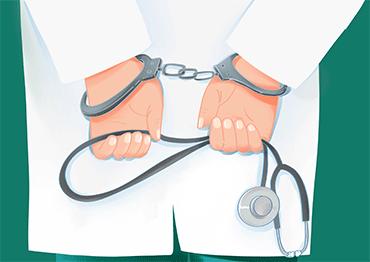
However, many teachers say the system is also being misused. Increasingly, parents choose to escalate minor disputes by filing hotline complaints rather than communicating directly, according to Hu Yong, a public school administrator in Changchun, Jilin Province. 

Over the past few years, Hu said his school district has received a dozen complaints from parents every semester. 

Wang Jie, a former teacher at a public school in Changsha, Hunan Province, said that teachers being reported once or twice a year is the new norm. Complaints often stem from homework load or perceptions that a teacher is too strict. 

But education authorities often prioritize appeasing complainants, shifting the burden of resolution onto schools and teachers. 

At the start of this year's spring semester, an anonymous complainant accused Lu Yue, a primary school Chinese teacher in Shandong Province, of assigning excessive homework, taking up their break periods with extra work and even encouraging students to slap themselves as punishment. Despite the accusations being proven false, Lu was still required to submit a written explanation and undergo a two-hour inquiry. "You have to repeatedly answer for things you never did," she told NewsChina. 

School administrators are now heavily involved in processing hotline complaints. Schools must submit formal written responses even when the allegations are found to be groundless. 

Once a complaint is received, school administrators assign a task force of mid-level staff to interview both parties, spending two to three days to collect evidence. Every school also has a committee representing the Communist Party of China, which conducts its own internal review, and interviews with the accused teacher are recorded and transcribed in full. 

Some cases involve multiple reports from an individual parent, forcing schools to spend up to a month on a single complaint, administrators said. "It takes up time that should be spent on teaching," Hu said, adding that they have little choice but to comply. 

Because complaints are used as performance indicators for schools and administrators, resolving them is often prioritized over teaching-related work, according to Mao Shengxuan of Beijing Normal University's faculty of education. 

In her 2025 paper published in Teacher Education Research, Mao said this complaint system has created a closed-loop structure that is largely oriented toward parental satisfaction. 

Local education authorities should first assess whether complaints are substantive before forwarding them to schools, said Chen Zhiwen, an academic committee member of the Chinese Society of Educational Development Strategy under the Ministry of Education. Otherwise, he warned, the system risks being exploited by individuals with malicious intent rather than genuine concerns. 

A 2024 survey by China Comment, a journal under the Xinhua News Agency, cited data from an education authority in Southwest China showing that most of the 128 complaints it received over eight months were ultimately unsubstantiated. In cases where teachers were falsely accused of physical abuse, the accusers faced no consequences. 

"If education institutions automatically penalize teachers whenever conflicts arise out of fear of public backlash, irrational complaints will only increase," Chen said.

Fear Factor
Lu said the anonymous report shook her. "It made me feel like I'm under surveillance in the classroom, as if someone is recording everything," she said. 

Since then, she has avoided disciplining her students, who are around 11 years old and often close to her in height. She no longer scolds those who do not hand in homework or disrupt class. She has also stopped intervening decisively in student conflicts. Instead, she simply tells them to "be kind to each other," which she admits is too mild. 

Wang described a similar situation. "The fear of being reported made me ignore misbehavior. As a result, discipline in the classroom became even looser," she said. 

According to trial rules issued by the Ministry of Education in 2020, teachers are permitted to discipline students who fail to complete assignments, use disrespectful language or disrupt class. The rules list around 16 acceptable punishments, including written apologies, standing for the duration of class, cleaning the classroom or community service on campus. For more serious infractions or repeat offenders, teachers can appeal for their schools to mete out suspensions, counseling, expulsions or transfers to special institutes for students with behavioral issues. 

However, several teachers told News- China that complaint systems discourage them from exercising these rights. 

Chen argued that education regulations should both prevent excessive protection of students and give teachers clearer, more practical disciplinary authority to reduce uncertainty and risk. 
Mao also noted in her research that misuse of complaint systems pushes teachers to prioritize protecting themselves in their interactions with parents. 

The system also puts teachers at a disadvantage because once a complaint is filed, any disciplinary action can potentially affect promotions for up to three years. In some cases, teachers on fixed-term contracts face dismissal, Li told NewsChina. 

If more teachers begin to avoid disciplining students out of fear of being reported, the consequences could be serious, Chen warned, as schools also teach students how to follow rules and function in society. Without appropriate boundaries and guidance, healthy socialization becomes impossible. 

Sichuan Province released trial rules in August 2025 that require schools to bear responsibility for dealing with disputes between parents and teachers involving teachers performing their official duties. 

Responding to a proposal from a National People's Congress delegate during the two sessions legislative meetings in March, education authorities in Jinan, Shandong Province pledged to clarify the boundary between discipline and corporal punishment and ensure schools take primary responsibility for handling parent-teacher disputes. It also emphasized that teachers' legitimate rights should not be sacrificed for the sake of avoiding public controversy. 

After Shen Yifei's livestream went viral, China Comment published an opinion piece in late May calling for an end to the practice of "seeking harmony at the expense of teachers."

On Defense
"In the past, parents would discipline their children after being reprimanded by teachers. Now some parents place unconditional trust in their children, who may behave very differently at home and at school. This often obstructs communication between families and schools," Hu Yong said. 

Chen argued that the strained relationship stems from an overemphasis on protecting the child emotionally. As a result, children are rarely criticized and are frequently praised instead. Parents' excessive attention to their children can also amplify perceptions of being wronged. 

"Parents are often misguided when filing complaints," Chen said, adding that teachers are still expected to be both highly effective educators and flawless in conduct. 

In a piece for China Comment, commentator Cao Lin argued that some parents now have a form of "consumer entitlement," treating schools as service providers where the customer is always right. He also noted that online posts, regardless of accuracy, can quickly gain strong support and place pressure on schools and teachers, who often feel forced to remain silent or concede. 

According to Yao at Beijing Foreign Studies University, procedures should be more clearly defined. Parents should be required to provide evidence where appropriate, and authorities should determine which cases warrant investigation. 

Chen further suggested that those who fabricate accusations or deliberately incite public outrage should face legal consequences. 

As of October 2023, Hong Kong's Guidelines for Handling School Complaints allow schools to disregard anonymous complaints, unsupported claims or cases lacking clear parties. In extreme cases involving harassment or repeated unfounded complaints, schools may restrict or terminate communication. If disputes remain unresolved after investigation and appeal, a review board issues a final decision, after which schools and authorities are not required to respond further. 

Schools in the Chinese mainland, however, lack dedicated professional mediators, and staffing constraints make recruitment difficult, Yao said. 

To improve communication, Yao suggested that parent committees in public schools play a more active role in building mutual understanding. She also proposed allowing parents to experience classroom teaching firsthand during open house events to better understand teachers' working conditions. 

"Families and schools should work in partnership. That relationship is being eroded by an adversarial mindset that treats the other side as opponents," reads a commentary on the People's Daily WeChat account on May 27. It called for "greater trust and understanding from parents, more professionalism and patience from teachers, and more responsive reform from education authorities" to support children's development.

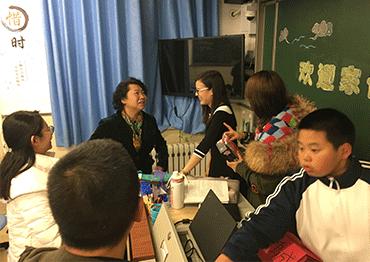
Wang Qing (R), a teacher at the Junior High School under Beijing No.4 High School, answers parents’ questions, November 22, 2018 (Photo by VCG)

Print