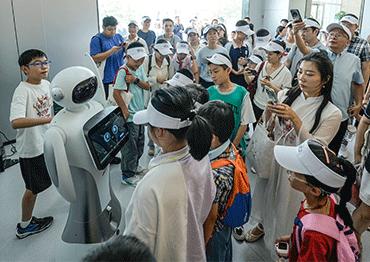
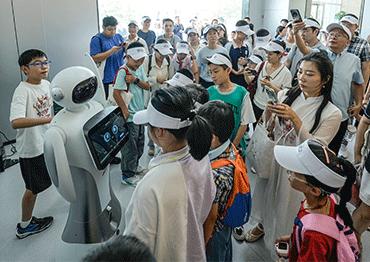
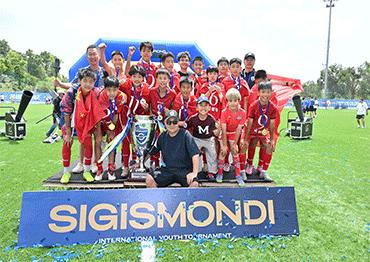
Besides big cities like Beijing and Shanghai, many areas in China are trying to catch up on the trend.
Yuan Bo, an internet engineer from Beijing, told NewsChina that AI-themed study tours are growing popular nationwide, from first-tier cities to remote areas like Xinjiang Uygur Autonomous Region and even county areas.
These popular camps are not cheap. Some AI camps in big cities like Beijing, Shanghai and Hangzhou cost 6,000 yuan (US$886), while tours to Hong Kong charge over 10,000 yuan (US$1,480). Overseas camps could cost 20,000-30,000 yuan (US$3,000-4,400) with destinations including universities in Singapore, Australia and the US. Project-themed camps are more expensive, reaching 10,000-30,000 (US$1,480-4,400) yuan.
Chen Chongjie noted that more newcomers are flooding in. Many institutions that previously offered outdoor activities and math or English training have turned to AI, often buying services from third parties. These camps, though they have existing name recognition, have no AI background.
"Many institutions that don't even have proper travel licenses are running study tours, giving rise to various malpractices such as false advertising," Chen Chongjie said. He added that some AI-themed camps are even held in hotels, blurring the definition of a study tour.
Under current regulations, study tour providers must possess three licenses: a business license, a travel agency permit and proof of educational service capacity. Yet many entities offering AI study camps are nothing more than recently registered cultural media companies, or even temporary one-person operations.
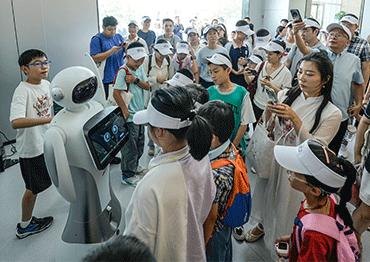
Many parents complained online about the poor quality and value of AI camps. Some said that the visits to universities and internet companies are just rushed walkthroughs and photo ops.
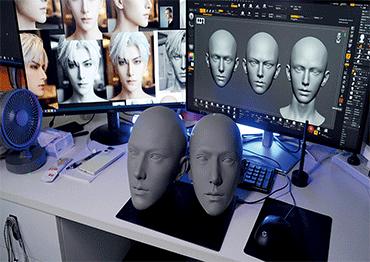
Xiao Ping, whose 13-year-old son went on an AI-themed tour to Hangzhou in July, told NewsChina that it fell vastly short of expectations. The tour was advertised as a tour to Alibaba, but the activity was actually held in a place near the company. The children were taught to make cable-driven robotic arms and use AI to create mini-games. "I think their main purpose is promoting their follow-up courses that cost 35,000 yuan (US$5,170)," said the mother from Jiangxi Province.
Wang Meng, who has engaged in outdoor study tours for more than 10 years, designed a trip to Harbin Institute of Technology (HIT) this summer. The camp was very popular as she cooperated with a high-tech company, where the children visited its semiconductor lab and took AI-related courses.
On social media, there are many products claiming to be HIT-related. "Actually, many are offered by local travel agencies that just invoke the name AI. The entire camp is simply about visiting and taking photos," Wang said. "The trip is worth it as long as they take photos inside HIT."
Even relatively high-end entrepreneurship-themed AI camps are regarded as overhyped. Some parents describe the whole process as role play. The teachers are temporarily employed and the children memorize presentations to perform in front of "investors."
"The parents should ask themselves, ‘What have they bought with 30,000 yuan (US$4,400), long-term capability or a beautifully packaged entrepreneurial experience?'" wrote one influencer who posts about AI on RedNote. Children can finish a prototype and demonstration in a few days with help from instructors, but it is hard to say that they really understand the technology, business and real customer demand.
 Old Version