Old Version
Politics

Same Crime, Same Time

China has issued a new judicial interpretation that lowers thresholds for legal liability for corruption in private enterprises, aligning them with public-sector standards in a push for unified anti-graft enforcement

By Yu Xiaodong , Tong Xizhong Updated Aug.1

AI-created illustration (by CNS)

China's top judicial bodies have stepped up oversight of corruption in private enterprises, lowering the thresholds for what constitutes a crime to bring them in line with standards previously only applied to public officials. 

The Supreme People's Court (SPC) and Supreme People's Procuratorate (SPP) released a new judicial interpretation guiding the application of provisions on corruption-related offences in the Criminal Law on April 10, which took effect on May 1. 

Experts said the move reflects a broader shift from focusing primarily on official graft to combating "all forms of power corruption" through tightening law enforcement of bribery by both individuals and companies.

Equal Standards
For years, China maintained what legal scholars described as a "dual standard" for corruption crimes involving public servants and those involving employees of private companies. 

Under a 2016 judicial interpretation, monetary thresholds for corruption-related offenses, including bribery by non-state employees and occupational embezzlement, were set at two and five times, respectively, of the corresponding standards applied to public officials. 

For instance, the threshold for criminal liability for accepting or soliciting bribes stood at the lower 30,000 yuan (US$4,400) for public servants, but non-State employees would have to have accepted bribes of at least 60,000 yuan (US$8,900) to be charged. Likewise, while public officials faced imprisonment of at least three years for embezzling amounts exceeding 200,000 yuan (US$29,600), the threshold for non-State employees to receive a jail term for embezzlement was set at 1 million yuan (US$14,800), five times higher. 

Moreover, while public servants were punishable by jail terms of over 10 years for taking bribes of "especially huge amounts," meaning over 3 million yuan (US$443,200), there was no specific amount for non-State employees. In practice, that meant corruption inside private enterprises often faced lighter criminal scrutiny. 

Under the new interpretation, non-state employees are subject to the same threshold for corruption-related offenses. Amounts exceeding 200,000 yuan are categorized as "serious" cases, carrying prison terms of three to 10 years, while cases involving more than 3 million yuan are deemed "particularly serious," potentially leading to sentences exceeding 10 years. 

Chen Wei, a professor at the Southwest University of Political Science and Law, said the move reflects a broader transformation in China's anti-corruption approach. 

"The focus of legal protection is shifting from integrity tied to official identity to integrity tied to positions of authority," Chen told NewsChina. Chen said that the higher criminal thresholds previously applied to private-sector employees stemmed from a longstanding policy approach that sought to shield private enterprises from excessive legal intervention by setting a higher bar for criminal prosecution. 

However, as the strategic importance of the private economy rises, equal protection of property rights has become a core demand of the rule of law. He argued that anyone abusing a position of authority to harm the interests of an organization should face equal legal consequences regardless of whether they work in the public or private sector. 

Chen's view is echoed by Wei Changdong, a professor at the East China University of Political Science and Law in Shanghai. "Applying a unified criminality liability can help strengthen deterrence across society, promote a culture of integrity and lower tolerance for corruption," Wei told NewsChina. "Corruption should not be subject to different legal standards based on a person's identity or status."

Private Corruption
As China's economy becomes increasingly sophisticated, corruption in the private sector appears to be rising rapidly. Data released by the SPP shows that more than 10,000 non-State employees were prosecuted in 2024 for corruption, a 25 percent year-on-year increase. 

According to data released by the SPC in December 2025, courts nationwide concluded 4,842 cases involving non-state employee bribery, occupational embezzlement and misappropriation of funds in the first half of 2025, representing an 11.6 percent year-on-year increase. 

One of the most widely reported cases involved Han Liu, former CEO of Ele.me, one of China's biggest food delivery platforms owned by Alibaba. With significant authority over supplier selection, evaluation and subsidy allocation, Han was accused of accepting payments from suppliers in exchange for securing logistics contracts across dozens of cities from July 2023. The alleged bribes amounted to around 40 million yuan (US$5.6m), linked to preferential delivery arrangements. He was arrested in July 2025 along with several others. 

In another high-profile case reported by State broadcaster China Central Television (CCTV) in May, an employee surnamed Wang at a major e-commerce platform in Hangzhou, Zhejiang Province, was accused of accepting bribes totaling more than 92 million yuan (US$12.9m) from over 400 merchants within just one year. 

Police found the payments were made through online transfers, cash and gold bars. Wang, who was responsible for approving merchants in the platform's furniture division, allegedly abused his position by trading approval rights for illicit gains. Both cases have yet to be adjudicated. 

According to a report on corruption crimes in Chinese private enterprises released in April by researchers at Beijing Normal University, corruption has increasingly spread beyond senior executives to rank-and-file employees. 

Based on an analysis of 760 court judgments involving 929 defendants from China’s public judicial database, the report found that among the 733 defendants whose positions could be identified, ordinary employees accounted for 32.3 percent. Accountants, sales personnel and other staff with direct authority over procurement, payments and operational approvals were frequently implicated. 

Occupational embezzlement was the most common offense, accounting for 51.58 percent of all cases. Traditional sectors including wholesale and retail, manufacturing and construction remained the hardest hit, due to their complex supply chains and large volumes of financial transactions. 

On May 19, the SPP said it would strengthen legal protections for enterprises by cracking down on crimes that infringe upon companies’ lawful rights and interests, in an effort to improve the rule-of-law environment for business. In its statement, the SPP highlighted six “typical” cases it has pursued in recent years, covering a range of corruption-related offenses involving non-State employees. 

One of the cases involved 48 employees at a subsidiary of a Dutch electronics company based in Zhuhai, Fujian Province, who ran a coordinated scheme to steal and resell products, including electric shavers and toothbrushes. Using falsified records and internal access to warehouses and materials, they repeatedly removed goods and sold them through outside buyers. The group involved multiple internal teams across production and logistics, with proceeds exceeding 100 million yuan (US$14.7m). In 2026, courts sentenced 35 defendants to prison terms ranging from eight years to several months, along with fines and partial restitution to the company. 

In another case announced by the SPP, rogue trader Chen, who controlled several trading firms in Shanghai, expanded into futures trading after earlier losses. He orchestrated a large-scale fraud involving aluminum ingots. Between 2018 and 2022, he and an associate used falsified warehouse receipts to repeatedly sell the same fake inventory, diverting proceeds to cover losses, speculative trading and personal expenses. The scheme affected 41 companies across both public and private sectors and resulted in losses exceeding 6.8 billion yuan (US$1b). Detained in 2022, Chen was sentenced in 2025 to life imprisonment, while his co-defendant, surnamed Sun, received a sentence of 13 and a half years. 

These cases suggest that corruption inside private companies has become both widespread and increasingly sophisticated. Highlighting the need for equal protection of enterprises of all types of ownership, including foreign-funded ones, the SPP pledged that it would trace criminal activities across the whole industry and strengthen filing supervision to combat corporate crime effectively.


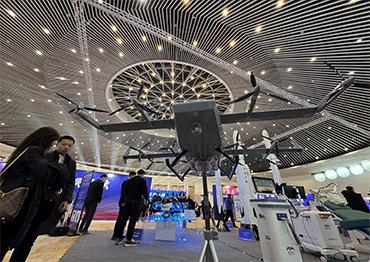
An exhibition showcases the technological achievements of private enterprises during the Fengtai Conference on High-Quality Development of the Private Economy, Beijing, January 21, 2026 (Photo by VCG)

Corporate Corruption 
Besides standardizing the threshold of criminal liability, the new document sets penalty thresholds for offering bribes to State officials. Individuals who offer bribes exceeding 200,000 yuan (US$27,800) may face prison terms of up to three years, while those involved in bribes of more than 2 million yuan (US$295,000) could be sentenced to between three and 10 years in prison.  

For the first time, it also sets out sentencing standards for both corporate bribery and corporate bribery-taking offenses. Under the new rules, companies that accept bribes exceeding 200,000 yuan or offer bribes of more than 400,000 yuan (US$59,100) may be held criminally liable. In vital public interest sectors, such as healthcare, the criminal liability threshold for corporate bribery offering drops to 200,000 yuan. 

The document also holds intermediaries who facilitate bribery criminally liable. In addition, non-traditional forms of bribery, such as jewelry, jade, calligraphy works or concealed profit-sharing arrangements, are subject to valuation, with the bribe amount assessed according to market value at the time the crime is uncovered. Under the new rule, public officials who fail to report substantial overseas assets face up to two years in prison if the amount of the assets exceeds 3 million yuan (US$440,000). 

According to Meng Tao, an assistant professor at the Renmin University of China Law School, the interpretation sends a clear signal that China’s anti-corruption campaign is shifting from targeting a small number of high-profile “tigers” to a more comprehensive, full-coverage enforcement approach. It also aims to address emerging forms of concealed corruption by closing legal loopholes and clarifying enforcement standards. 

While most scholars agree the new interpretation will be a deterrent to corruption in non-public sectors, some caution that authorities still need a different approach in applying criminal law to corruption involving public officials and private actors. 

“We must recognize that corruption involving public power and corruption in private enterprises differs in both scale and harm,” Shi Fang, a professor at the China University of Political Science and Law, told NewsChina. “In applying the law, decisions on criminal liability and sentencing should take into account the nature and circumstances of the offence to ensure that punishment is proportionate to the crime.”

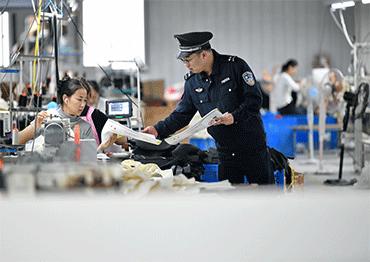
A police officer distributes pamphlets cautioning private enterprise employees on preventing illegal fundraising activities, Fuyang, Anhui Province, October 10,2025 (Photo by VCG)

Print