Chinese archaeologists have uncovered an iron meteorite artifact in a sacrificial pit at Sanxingdui, an ancient Bronze Age site located near Chengdu in Southwest China's Sichuan Province which was confirmed as the capital of the ancient Shu Kingdom, dating back more than 3,000 years.
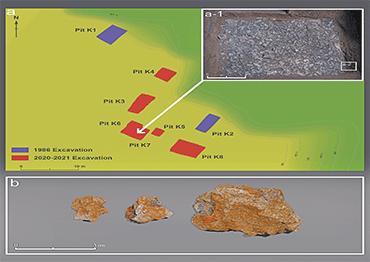
According to Li Haichao, leader of the archaeology team, researchers discovered an approximately 20-centimeter-long axe-shaped artifact in Pit No.7 in 2021. Subsequent laboratory tests confirmed the artifact is an iron meteorite relic, according to an article published by Sichuan University and the Sichuan Provincial Cultural Relics and Archaeology Institute in the international journal Archaeological Research in Asia.
Archaeologists noted this discovery is the earliest iron meteorite relic ever found in Southwest China and the largest in volume among all known iron meteorite artifacts from China's Bronze Age.
Unlike the bronze-meteorite composite artifacts commonly found in the Central Plains along the middle and lower reaches of the Yellow River, this relic is made entirely of meteorite iron. Although it is not a man-made smelted iron relic, it rewrites the early history of iron material utilization in the southwestern region and provides valuable physical evidence for studying the ancient Shu civilization's understanding, utilization and processing technology of meteorite iron resources.
Archaeologists will further investigate the source of the meteorite iron and explore the artifact's function and ritual attributes.
 Old Version