The more ritual bronzes a bride's family could provide, the higher their prestige. In addition to objects, wealthy families sometimes sent money, servants or even secondary wives and concubines as part of the marriage arrangement.
In the early Han Dynasty (206 BCE- 220 CE), after years of war, economic conditions were poor and dowries remained relatively modest. As prosperity returned and powerful clans rose to prominence, wedding gifts once again became extravagant.
Historical records from the Eastern Han (25-220) describe the marriage of a daughter from the influential Yuan family. When she was married off, 100 maidservants accompanied her, each dressed in luxurious silk garments. The wedding procession filled the streets with carriages, forming a spectacle that impressed the entire community.
During the Tang Dynasty (618-907), dowries took on an increasingly international flavor. Tang China was famously open to the world, and goods traveled along the Silk Road from Central Asia, Persia and beyond. Exotic items became fashionable status symbols, and many appeared as wedding gifts. Gold and silver vessels, jewelry, rare spice and even glass objects, considered then to be as valuable as gold, could all form part of a bride's belongings.
One aristocratic bride of the Tang period received a necklace made of glass beads intertwined with gold and jade. Scholars believe the glass originally came from Persia. In Zoroastrian culture, Persian glass symbolized containers of sacred light. When glass beads were introduced to people in the Tang capital of Chang'an, near present day Xi'an, they were incorporated into Chinese jewelry traditions and associated with the Buddhist concept of the "Seven Treasures," representing spiritual purity.
The growing wealth of dowries also reflected a shift in social values. Earlier marriages among the elite emphasized family lineage and noble ancestry. But by the Tang period, wealth itself had become increasingly important. Contemporary writers complained that some families treated marriage almost like a business transaction.
The trend intensified in the Song Dynasty (960-1279). The power of old aristocratic clans declined, while the civil service examination system opened paths for talented scholars from modest backgrounds to rise quickly through government ranks. A young man who passed the examinations could suddenly become an attractive marriage partner.
Families with daughters were eager to secure these promising scholars as sons-in-law. As a result, dowries soared to astonishing levels. Some historical accounts describe wedding gifts worth hundreds of thousands or even millions of coins.
Even prominent statesmen felt the pressure. The famous writer and politician Su Zhe reportedly fell heavily into debt while arranging marriages for his daughters. His brother, the celebrated poet Su Shi, once wrote in a letter that Su Zhe had "five daughters and debts piled up like mountains."
Because dowries had become so burdensome, some communities developed charitable practices to help poorer families marry off their daughters. Wealthy individuals occasionally donated money for this purpose, and in certain places formal funds were established to assist with wedding expenses.
Despite the variations across time, one fact remained constant: For women in traditional China, a dowry was more than a collection of objects. It was a form of economic protection. It represented a bride's status within her new family and could sometimes provide a measure of independence in a world where women's rights were otherwise limited.
Stories from later periods illustrate just how seriously people took the value of dowries. One anecdote from the Qing Dynasty (1644-1911) tells of a husband and wife who made a living selling flatbread. While watching a neighbor's wedding procession, they began arguing about the estimated value of the bride's dowry. The husband insisted it was worth 500 taels of silver, while the wife claimed it was only 300. Their debate grew so heated that the husband grabbed his wife by the hair and they started fighting in the street. Eventually, bystanders said the bread in their oven was burning. The husband reportedly replied that ruining a batch of bread was nothing compared with misjudging someone's dowry by hundreds of taels.
The story is humorous, but it reveals how closely the public watched these displays of wealth. Dowries were not private matters. They were social spectacles that reflected reputation, status and family pride.
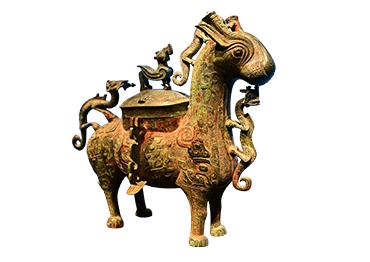
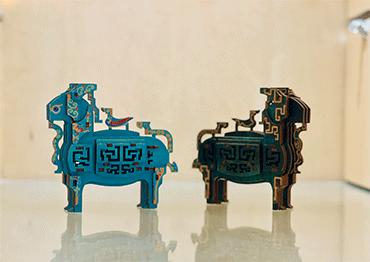
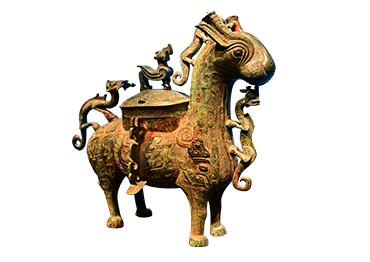
Seen in this long historical context, the Deng Zhong Xi Zun becomes more than just a strange bronze creature from 3,000 years ago. It is a witness to an ancient marriage alliance, a symbol of diplomacy between states and an artifact from a world where a bride's possessions could carry enormous political and social meaning.
Today, when modern discussions about marriage revolve around statistics, property prices or changing social values, it is easy to forget that the material culture of marriage has deep historical roots. Long before wedding registries or engagement rings, families expressed their hopes, ambitions and anxieties through objects like this remarkable bronze vessel.
Somewhere in the early Western Zhou period, a young noblewoman from the State of Deng left her homeland and traveled north to begin a new life in the Zhou capital. Among the many gifts she carried with her may have been this fantastical bronze beast. Three thousand years later, it stands quietly in a museum case, telling a story about marriage, power and the enduring language of objects.
 Old Version