Old Version
Economy

Second-class Staff

Designed for temporary staffing, China's labor dispatch system has become a widespread tool for cutting costs - and depriving workers of job security. As abuses mount, experts are calling to sack the system entirely

By Xie Ying , Zhou Qunfeng Updated Jun.1

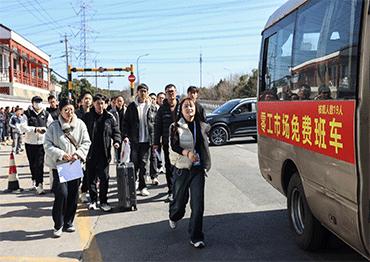
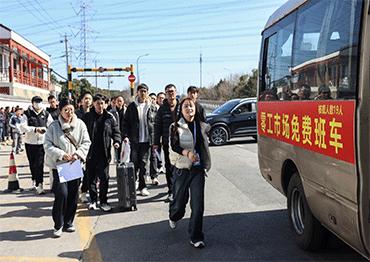
Wang Qiaoqiao (front), a recruitment manager at the Gig Market of Shangchuan Road Service Center, Pudong New Area, Shanghai, leads job seekers to a free shuttle bus, March 10, 2026. The recruitment fair attracted more than 400 applicants from all over the country (Photo by IC)

For the past six years, Zhang Lei has worked for a major Stateowned enterprise (SOE) on China's east coast. He said he feels like a "second-class citizen" in his firm. 

When he was hired in 2020, the SOE, a construction machinery maker, told him to sign a contract with a thirdparty labor agency instead. He was later assigned to an overseas branch of the SOE in after-sales service, yet his status as an agency worker remained unchanged. 

This model, commonly known in China as "labor dispatch," is very similar to temp agencies: the worker signs a contract with an agency rather than directly with the employer, and the agency handles wages and social security contributions. But unlike traditional temporary work, many dispatched workers fill long-term, core job positions. 

The latest figures from the Ministry of Human Resources and Social Security show China had about 14.9 million such registered workers by March 2025, spanning sectors such as manufacturing, construction, services and banking. The real number is likely much higher when unregistered or unregulated arrangements are taken into account. 

Despite their numbers, dispatched laborers face systemic unfairness. Zhang Lei earns 425 yuan (US$61) less per month than regular staff in the same role. He is also denied monthly housing compensation worth 1,453 yuan (US$210), as well as promotions, bonuses and other benefits. 

"The system was designed to meet temporary staffing needs, but it has been widely misused for years," Zhou Shihong, a member of the National Committee of the Chinese People's Political Consultative Conference (CPPCC), told NewsChina. "It was legally intended for temporary, auxiliary and substitute positions, but instead has become a default tool for securing low-cost labor, which seriously undermines workers' legitimate rights and interests," he said. 

During the 2026 two sessions, China's top annual meetings for legislative and political advisory bodies, Zhou submitted a proposal to abolish the labor dispatch system.

Equal Work, Unequal Pay
Xia Xiaoqi, 24, had a similar experience. In July 2023, he found a job as a crane operator at an SOE handling bulk coal and ore cargo through an agency. His father, Xia Tao, said young Xia's monthly pay ranges from 4,000 to 6,000 yuan (US$578-867), roughly on par with regular staff. However, his year-end bonus is just one-fifth of what formal employees receive, and he has no path to promotion. 

Zhang Qin, another dispatched worker at a large SOE in Northeast China, told NewsChina she earns at least more than 1,000 yuan (US$145) less per month than regular colleagues doing identical work, with her year-end bonus only one-third of theirs. 

For Li Jun, 37, an auxiliary police officer in a North China county, the disparity is even more stark. He often works more than 90 hours a week, longer than some regular officers, yet earns just 25,000 yuan (US$3,613) a year. By comparison, newly recruited regular officers make 80,000-90,000 yuan (US$11,560- 13,005) a year, including transportation, phone fees and other allowances. 

"The annual salary of a newly hired officer is double what a nine-year auxiliary officer earns," Li said. He was hired through rigorous written exams, interviews and physical fitness tests, only to discover upon signing his contract that he would be classified as a dispatched worker. 

Dispatched auxiliary police were once widespread. Media reported they made up more than 60 percent of auxiliary forces in many cities and counties. 

According to a 2013 report by the Yangzi Evening News, an investigation by authorities in Nanjing, Jiangsu Province that covered 91 agencies, 737 employers and over 150,000 dispatched workers found that regular staff earned an average of nearly 1,200 yuan (US$173) more per month than their dispatched counterparts.

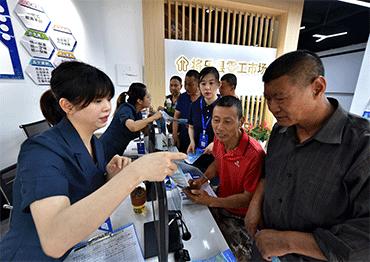
Part-time and temporary job applicants talk with an advisor on the ffrst day of a gig market in Jiangle County, Sanming, Fujian Province, June 9, 2023. The market, a government-guided platform, offers services for temporary job seekers (Photo by VCG)

Fake and Real
Under China's Interim Provisions on Labor Dispatch, dispatched workers may only be assigned to temporary, auxiliary and substitute positions for no longer than six months. In practice, however, many perform long-term roles. 

Zhang Qin said her employer, a trucking company, used blank contracts to evade the rules. She was told to sign first, and her job details would be filled in later. Her contract eventually listed her as a "vehicle examiner," but her actual job was "vehicle scheduling," a core position. 

Nearly every worker interviewed had held the same post for far longer than six months. Employers commonly rely on contract renewals or switching labor agencies to avoid legal responsibilities. 

After nine years at the same SOE, Zhang Qin was ordered to sign a new contract with a different labor agency, while staying in her original job. 

"The most common and hard-to-challenge abuse is ‘reverse dispatch,' where employers pressure long-time employees to sign with an agency, masking the real employment relationship and stripping workers of tenure-based protections," Tan Mintao, a lawyer at Beijing Zhongwen Law Firm (Xi'an Branch), told NewsChina. 

An employee at a labor agency in Shandong Province, speaking on condition of anonymity, told NewsChina the incentive: Under Chinese labor law, workers who sign fixed-term contracts with the same employer twice are entitled to openended contracts. "Many companies use labor dispatch to avoid this obligation," the employee said. 

To protect dispatched workers in cases where employment is terminated, the Interim Provisions on Labor Dispatch require agencies to sign two-year minimum contracts. But in reality, oneyear renewals remain common. Many workers also have little understanding of their social security contributions, which are negotiated between agencies and host companies. 

"Generally, a host company pays wages and insurance fees to the agency, but the agency may deduct wages and contribute only the legal minimum to social insurance, or even skip payments entirely," Zhou Shihong said. "If agencies passed everything to workers, they'd struggle to make a profit." 

NewsChina reached out to the agencies involved in these cases, but some did not respond, while others hung up upon learning the purpose of the call.

Struggling for Justice
According to Wang Binyi, a lawyer at Shanxi Mu Shang Law Firm, labor dispatch was introduced in China in the 1980s to help foreign-invested enterprises hire Chinese workers. 

It expanded rapidly in the 1990s during SOE restructuring when large numbers of workers were laid off, and later spread across multiple sectors as employers increasingly turned to dispatched labor to reduce costs and maximize profits. 

Although the Interim Provisions on Labor Dispatch limit dispatched workers to 10 percent of an enterprise's total workforce, violations are widespread. 

In March 2024, listed firm Sinomach Precision, a manufacturer based in Luoyang, Henan Province, said that dispatched workers accounted for 38.7 percent of its workforce by September 2023. The company attributed the high ratio to rapid growth and strict SOE hiring rules, and pledged to reduce it to the legal level within five years. 

Lawyers warned this tripartite structure creates significant barriers to justice, since agencies do not supervise daily work, while host firms do not directly sign contracts with workers. 

In a 2022 case in Zhenjiang, Jiangsu Province, a dispatched worker surnamed Tian was injured by a forklift after just 16 days. The company denied liability, citing no direct employment relationship. Tian only secured compensation after a court ruling. 

In another case disclosed in January, a dispatched gas fitter surnamed Shi in Suizhou, Hubei Province, was dismissed without compensation. He was denied unemployment benefits because his agency did not pay for his required unemployment insurance. He received relief only after labor arbitration. 

That same month, more than 100 dispatched workers at a subsidiary for premier alcohol distiller Kweichow Moutai in Guizhou Province complained their contracts were not renewed and that their severance pay was based only on their latest short-term contract, even though many had worked there for years. They told media the company had switched agencies to break tenure continuity. The case remains under arbitration. 

"Workers are usually in a weaker position and reluctant to rock the boat... To keep their jobs, they often accept unfair treatment," lawyer Wang said. 

Xia Tao said his son was promised formal employment after his initial two-year contract, but the agency failed to follow through. "My son feels exploited, but he dares not speak up. He needs the job and fears retaliation. He doesn't even know whether his contract will be renewed." 

Zhang Lei has filed complaints seeking equal treatment but has no plans to leave. "They just told me to quit if I am not satisfied and called me a troublemaker," he said.

Looming Termination
Authorities have taken steps to curb abuses. In 2025, the Ministry of Human Resources and Social Security ordered local governments to establish credit rating systems for labor agencies. Henan Province, for example, evaluates agencies based on compliance with regulations, including wage payments, social security contributions and contract adherence, with poorly rated firms pushed out of the market. 

Inner Mongolia Autonomous Region and several other areas have already banned government departments from using dispatched workers. In 2025, the Ministry of Public Security released a document on deepening the reform on auxiliary police officers, proposing to gradually transition auxiliary police officers into formal employment. 

Yet pressures persist. Meng Fei, an administrator at a public hospital in Jinan, Shandong Province, told NewsChina that his facility uses more than 20 dispatched workers, including pediatricians and sonographers, due to urgent staffing needs and strict headcount quotas. 
These tensions have sparked fierce debates among experts over whether the labor dispatch system should be abolished. 

Zhou Shihong supports full abolition, arguing that the internet era allows employers and workers to connect directly. 

"From the perspective of enterprises, the abuse of dispatched labor gives some enterprises unfair competitive advantages by shifting social insurance and welfare contributions to agencies," Si Zhengke, a commentator with the State-run Chongqing Legal Daily, wrote following Zhou's proposal. "From the perspective of workers, the misuse suppresses motivation and creativity, and makes them feel insecure," 

Other experts caution that abrupt abolition could destabilize some enterprises and agencies, and even drive the underground practice. "We can't take a ‘one-size-fits-all' approach, as some employers do have real demand for temporary, auxiliary and substitute positions," Feng Shuizhang, dean of the Institute for Economic and Social Research at Jinan University in Guangdong Province, told NewsChina. 

Lawyer Wang Binyi shared this view. "Labor agencies can meet certain needs. For example, if you organize a large concert or some big event, you will need lots of temporary and auxiliary workers, and labor agencies can help recruit security guards as well," he said. 

Wang argues a better approach is stricter regulation and clearer government guidance. He called for more precise legal definitions of roles that allow dispatched laborers and stronger supervision that returns labor dispatch to its original purpose. 

Han Ying, an official at a provincial human resource and social insurance bureau, agrees. "We also have to improve supervisors' abilities, since supervision and enforcement require knowledge in multiple aspects, including labor law, social insurance and professional skills," he told NewsChina. 

Interns Sun Ruimin and Wu Huihan contributed to this story.
Print