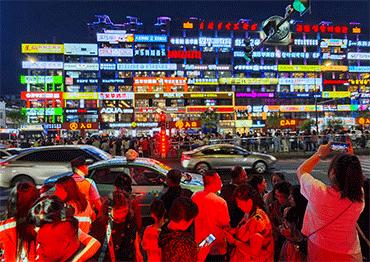
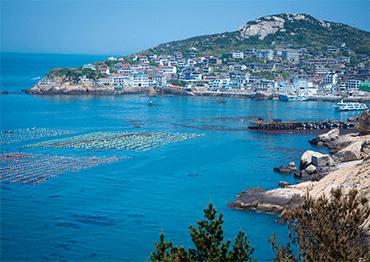
The Greater Bay Area (GBA) encompasses eleven interlinked cities stretching around the Pearl River Delta. These major cities are Guangzhou, Shenzhen, Hong Kong, Macao, Zhuhai, Foshan, Huizhou, Dongguan, Zhongshan, Jiangmen and Zhaoqing. Together they form one of the most densely populated and economically dynamic metro-regions on the planet. It is a place where container ports, financial districts and technology parks sit alongside dim sum restaurants, mahjong playing veterans and old river temples. The GBA weaves together Chinese ambition and coastal cosmopolitanism into a single, restless city-cluster. Moreover, as a dynamic and diverse metropolis, the GBA is bursting with creativity. This creative mindset ensures that the GBA is rapidly becoming one of the world’s leading centers for the arts and cultural tourism.
Each of the cities within the GBA features their own bustling cultural scene, however none of these scenes lives in isolation. Instead, thanks to the incredible interconnectivity of the region, these artistic communities thrive in an interlocked web of passionate creation.
For me, the real magic of the GBA lies in how casually one can treat this enormous area as a single cultural neighborhood. One recent Saturday in November 2025, I spent my afternoon wandering through a Banksy exhibition in Shenzhen’s Sea World Art and Culture Center, moving from stenciled protest pieces to satirical photographs and videos of tongue-in-cheek street performances. Less than 24 hours later, I was in a plush seat at Dongguan Yulan Theater, watching Broadway’s beloved production of Charlie and the Chocolate Factory on its Asian debut. The speed with which I was able to move from gritty British street art to a lavish American musical, simply by hopping across city borders, feels entirely normal here, which is in itself an extraordinary privilege.
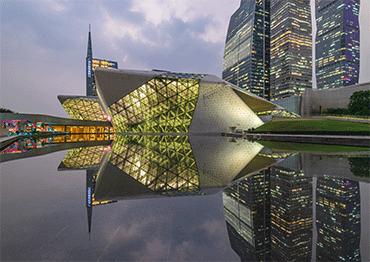
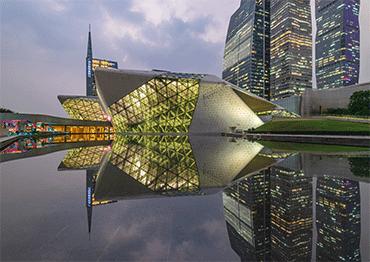
The months leading up to and following that weekend I have been fortunate enough to trace a cultural constellation across the region. In September, I again found myself in Shenzhen’s Sea World Art and Culture Center. On that occasion I stepped into the vivid inner world of artist Frida Kahlo. Her self-portraits, Mexican folk motifs and unapologetic vulnerability were displayed with a sensitivity that made me forget, at times, that I was in a high-tech Chinese megacity, rather than a Mexican village. A short train ride away, I slipped into a very different atmosphere at the Guangzhou Opera House, designed by British architectural icon Dame Zaha Hadid. Together with friends from across the GBA, I immersed myself in the world of Murder on the Orient Express, where Agatha Christie’s careful plotting and Poirot’s meticulous logic unfolded beneath the curves and shadows of one of China’s most iconic modern theaters.
The region’s musical and theatrical life is equally classical and postmodern in flavor. Also in September, I crossed the water to visit beautiful Hong Kong and hear An Evening of the Italian Masters: Vivaldi, Rossini, Donizetti & Puccini at Tsuen Wan Town Hall. As the strings and arias soared, I was acutely aware that only a few hours earlier I had been on the Chinese mainland, surrounded by the everyday bustle of Guangdong streets. In early summer, I was in Shenzhen Poly Theater watching British soprano Sarah Brightman in Sunset Boulevard, a West End classic written by Brightman’s former husband, Lord Andrew LloydWebber. This musical masterpiece playing amidst the modernity of the GBA reminded me how readily the region welcomes and reinterprets global cultural icons. This is exactly the same welcoming spirit that has allowed the region to host, among many other recent events, British and French film festivals, a German opera season, and festivities for Mexico’s annual Day of the Dead. Celebrations of global culture, which might historically have been limited to parties in embassies, are now visible and vibrant in cinemas, museums, and theaters across the region.
Indeed, many of the international artistic exhibitions, performances and experiences that tour the GBA, find a new and unique interpretation within region. In April I took my seat in Foshan Grand Theater for Life of Pi, a production that feels particularly at home in a region so intimately connected to the sea, to migration and to layered identities. Watching the story of a boy, a tiger and the vastness of the ocean unfold in a modern theater in a historic Lingnan city, I was struck by how naturally the Greater Bay Area embraces narratives of movement, resilience and reinvention. These narratives mirror the region’s own evolution from river delta to a global powerhouse.
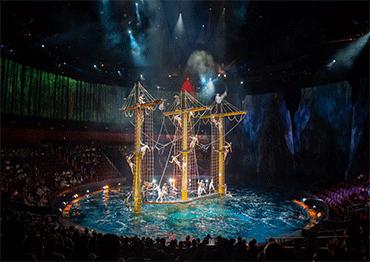
However, if there is a single performance that symbolizes the GBA’s blend of ambition and spectacle, it is surely The House of Dancing Water in Macao’s City of Dreams. After a hiatus spent renovating their phenomenal theater and refining their classic show, the production has now returned. I saw The House of Dancing Water many times pre-pandemic, and the prospect of watching it again, in its refreshed form, feels like revisiting an old friend who has been given a fabulous makeover in my absence. The sheer technical audacity of the production, with its plunging stage and gravity-defying choreography, sits perfectly within a region that treats innovation as a way of life.
What makes all of this possible is the dense mesh of connectivity that binds the Greater Bay Area together. High-speed trains, metro lines, intercity buses and ferries turn what could be daunting distances into simple weekend choices. I do not have to commit to a weeklong city break to enjoy a world-class gallery or theater. Instead, I can decide on a Saturday morning whether I fancy Frida Kahlo in Shenzhen, Italian opera in Hong Kong, or a murder mystery in Guangzhou. In many countries, such a range of options spread across an entire region would feel cumbersome and unmanageable, yet in this magnificent corner of southern China, it feels as convenient as crossing town.
Crucially, these cities are not competing islands of culture. They are collaborative nodes in a shared creative ecosystem. The touring companies, orchestras and exhibitions that criss-cross the GBA do more than sell tickets, they help weave a common cultural language across the diverse local, international and historical communities that create this region. Audiences follow shows from city to city, while artists and organizers form networks that stretch from Foshan’s grand theaters to Dongguan’s modern stages, from waterfront cultural districts in Shenzhen to the shimmering skyline of Hong Kong. The result is a region where diversity is not just tolerated but actively curated.
As the GBA continues to develop, its cultural offer feels less like an added extra and more like a defining feature. This is a place where you can watch a British musical led by an international star one weekend, immerse yourself in the life of a Mexican painter the next, and still find time for Italian opera, experimental street art and a gravity-defying water show. The sheer variety and international quality of the arts here does more than entertain. It shapes how residents and visitors understand the region, not simply as an economic engine, but as a vibrant, interconnected home for stories, music and imagination.
 Old Version