Old Version
Economy

Video Gaga

Rapid advances in AI-powered video generation are boosting profitability for both model developers and creators helping to render a whole new industry

By Wang Shihan Updated Jan.1

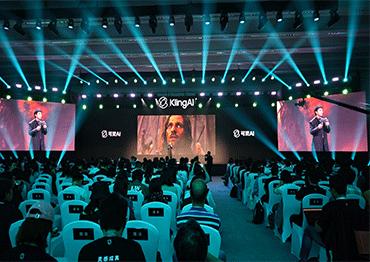
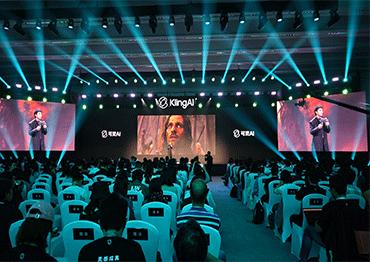
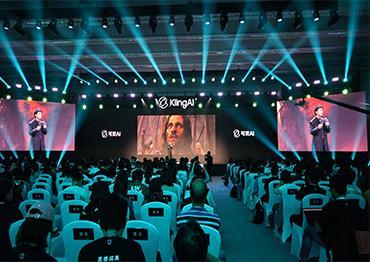
Kling AI hosts the “From Vision to Screen” launch event for its Kling AI 2.0 Model in Beijing, highlighted by the official debut of Kling AI 2.0 Video Generation Model and Kling AI 2.0 Image Generation Model, April 15, 2025 (Photo by VCG)

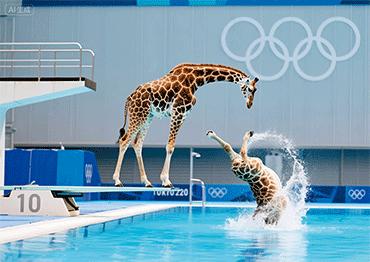
On June 23, Zhou Peng woke up to his social media blowing up. The night before, he had posted an AI-generated video titled “Animal Diving” on Douyin (China’s TikTok), featuring a giraffe, a pig and a corgi performing Olympic-style dives.  

Zhou, who creates AI videos for clients, never expected the clip to take off. “This video made me famous in the community and brought in more orders,” he told NewsChina. Each order takes him seven to 10 days to complete and costs clients 1,000 to 2,000 yuan (US$140-281), but the return can be 10 times higher, he said.  

Zhou used Hailuo 02, an update to the AI video generation model released by Shanghai-based MiniMax. He said that earlier versions could not handle the computational fluid dynamics required for animating splashes.  

The tool has shown early signs of commercial viability. Sheng Jingyuan, MiniMax’s global business general manager, said Hailuo AI has seen revenue growth since its launch, from both consumer subscriptions and enterprise partnerships.  

Others are reporting profits as well. Startup Alsphere told NewsChina it has reached positive cash flow, with subscription revenue from over 100 million users covering most of its costs. Kling AI, released by short-video platform Kwai, maintained monthly paid revenues of more than 100 million yuan (US$14m) in April and May.  

Just a year ago, the industry faced criticism for burning money without a mature business model. Now, despite fierce competition, profitability appears within reach. 

Model Examples 
Zhou only started in the field in late January 2025, initially making AI videos part-time. In June, he committed full-time.  

He spends hours testing models to optimize each shot. When Hailuo 02 came out, he experimented with uploading animal images to create diving sequences, then enhanced the 18-second clip with AI-generated sports commentary. The result took two hours to produce, and racked up 60,000 likes with 210,000 shares.  

The success sparked a wave of animal-sports content. In the following days, Douyin’s #PetOlympics hashtag surged to 540 million views, with over 9,000 creators contributing videos of animals competing in gymnastics, figure skating and high jump.  

Cute pet videos like these are trending on international platforms too. On June 20, Instagram account @pablo. prompt posted clips of cats performing triple-and-a-half dives, each with distinct personalities, from lazy strolls to energetic leaps. The reel gained 250 million views and nearly 10 million likes.  

Sheng said she had “predicted” that cat-diving videos would be a hit even before Hailuo 02 launched. “Creators have long wanted to make such videos, but no model could deliver the effect until now,” she said.  

“In the past, AI-generated video aimed to look realistic,” Sheng added. “Now audiences find obviously unreal videos just as entertaining.”  

Other viral trends include generating plush versions of famous landmarks and chopping glass-like fruits. “It’s easy to copy an AI video. The real draw is novelty,” Zhou said. “That depends on how often platforms roll out model updates.”  

Sheng emphasized that staying power comes not from viral templates but from model capabilities. “The key is whether the model can solve specific problems,” she said. “The success of Hailuo 02 lies in enabling high-difficulty physical movements.”  

While Hailuo 02 and Kling AI mainly serve professional creators, Alsphere has taken a different route with its consumer app PixVerse, which boasts more than 40 million global users. Last October, PixVerse released a viral template that transforms users into the Marvel character Venom, sparking more than 1 billion video views worldwide.  

Faster generation is also crucial. Alsphere says PixVerse can create a video in just 5-10 seconds. CEO Wang Changhu explained: “The key is lowering the barrier. Users only need to upload a photo and pick a template, no prompts required. Anyone can do it.”  

In April, an AI-generated short drama by Yang Zheng won a competition and was selected for release on video platform Youku. The series has six episodes, each no more than two minutes long.  

Yang handled every step. He used language model Claude 3.7 to refine the script and Hailuo 01 to generate visuals. The project took 25 days and cost him about 1,000 yuan (US$140), covering subscriptions for AI video platforms as well as software for dubbing, music and editing. 

Two months later, Yang signed a contract with a major video platform to adapt comics into dramas. He is also producing AI-powered costume dramas and content tailored for overseas audiences, with plans to expand his studio.  

“For AI-generated dramas, it’s still experimental,” Yang said. “My clients are mainly startups or newly created departments exploring AI-generated content. They want to seize opportunities but remain cautious.” 
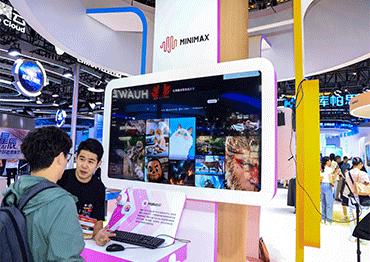
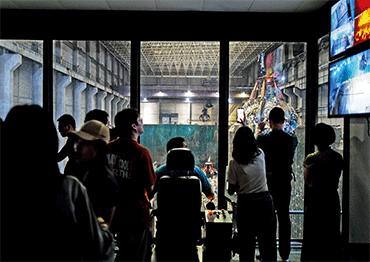
People at the MINIMAX booth, an AI technology company, discuss AI content creation and video production at the World Artificial Intelligence Conference held in Shanghai, July 29, 2025 (Photo by VCG)

From Toys to Tools 
The race to upgrade models is expected to benefit more creators like Yang, while also pushing model developers closer to commercial breakthroughs.  

At a Beijing AI forum in June, Huang Weilin, director of ByteDance’s Seed Team for image and video generation, said that efficiency, retention and revenue are now the key benchmarks for commercialization. Over the past year, download rates for user-generated images have jumped from the teens to over 60 percent, and 30-day retention for AI apps rose from just above 10 percent to around 40 percent.  

Top AI video generation companies are projected to reach US$100 million in annual recurring revenue in 2025, with growth potential of US$500 million to US$1 billion in 2026. ��The second half of 2025 or 2026 will be critical for commercialization,” Huang said. 

Sheng Jingyuan of MiniMax told NewsChina that since the release of its latest model, “Hailuo AI has performed strongly in retention, engagement and conversion rates. Revenue has grown at both the consumer and enterprise ends, domestically and abroad.” She added that video generation, among all multimodal technologies, has the fastest pace of upgrades and is proving especially promising.  

Currently, most of Hailuo AI’s users are creators from more than 100 countries and regions. On the enterprise side, clients include mid-sized domestic internet companies as well as traditional and tech firms overseas.  

Alsphere’s PixVerse app has attracted over 60 million users across 175 countries and regions, proving its business model works in most major markets. In June, it launched a domestic version for Chinese users.  

Alsphere told NewsChina that profitability hinges on meeting users’ basic needs and enabling viral content at low cost. “Chinese companies have an edge thanks to technical talent accumulated during the internet era and a deep understanding of pain points in the short-video ecosystem,” the company said.  

AI-powered videos are already being used in film and TV production, advertising, e-commerce, urban tourism, animation, education, gaming and entertainment. It shows that as new applications emerge, more creators are turning just-for-fun video generation into professional tools.  

According to Fortune Business Insights, a global market research and consulting firm, the global AI video generation market was valued at US$620 million in 2024 and is projected to reach US$2.56 billion by 2032. 

A screenshot of an AI-generated video shows diving giraffes

Making the Cut 
But survival in the sector is far from a sure thing. Competition is intensifying and user loyalty remains low. With new models constantly released, creators frequently switch tools.  

Zhou Peng told NewsChina that in the first half of the year he used Kling AI for its high-definition smoothness and ByteDance’s Jimeng AI, which excels at animation. Now he relies on Hailuo 02 for its special effects. “Never put your trust into just one platform. Different models lead at different times,” he said.  

In early July, Google’s Veo3 announced an upgrade that allows it to generate video clips from a single photo, complete with voice and improved character consistency. Users quickly flocked to it for sci-fi and fantasy videos, which the model excels at.  

Each model has its niche. According to Artificial Analysis, an independent platform that specializes in analyzing AI models, of the companies ranked in its text-to-video list, seven are based in China, six in the US, and one in the UK. In the image-to-video category, six are Chinese, five American and one is Israeli. Chinese firms including ByteDance, MiniMax, Kwai, Alibaba and Tencent all made the list.  

“Models must stand out, either by excelling in a niche or offering something unique. Mediocre models will struggle to gain traction, whether in open-source communities or commercialization,” Sheng said.  

Pricing also plays a role. A report by Guoyuan Securities noted that subscription prices for mainstream AI video models range from 0.2 to 1 yuan (US$0.03-0.14) per second, already far cheaper than traditional film and TV production. Leading companies continue to push for more cost-effective products. For example, MiniMax’s new NCR architecture, launched in June, gave Hailuo 02 triple the parameters and quadruple the training data of its predecessor, while keeping prices lower than competitors.  

“It’s a tug-of-war, a close-quarters fight where every company, big or small, must seize every opportunity,” Sheng said. “In this environment, you can quickly tell which companies are on the fast track by how aggressively they release stronger models and build a positive flywheel of user growth and feedback.”  

At the start of 2024, the debate was whether any model could surpass Sora, the video generation tool released by OpenAI. Now the market has exploded into a landscape of fierce competition.  

In March, US venture capital firm Andreessen Horowitz released its ranking of the world’s top 100 AI consumer apps. Hailuo AI and Kling AI placed 12th and 23rd for web-based products, with Sora at 37th. Among mobile apps, PixVerse ranked 52nd.  

“When I started, investors and industry experts told me video generation wouldn’t be commercially viable for five years,” said Alsphere CEO Wang Changhu. “Two years later, I’m still here. I feel lucky, but also under constant pressure to survive.”  

Now, Wang said, the challenges remain the same: “How can we stay in the first tier? How should we raise and spend funds efficiently? How can we fast-track commercialization? How should we compete with giants? How should we deal with open-source competition? These are still the questions ahead.”

Print