Yet it may take years or even a lifetime to strike that “balance.” Many feel this is unfair to biological parents and shows too much leniency toward the buyers.
“Even though the foster parents treat the trafficked children very well, they do it out of selfishness, because they need children to carry on their family lines. That child could come from anywhere. But for biological parents, their children are irreplaceable,” read a comment on NewsChina’s WeChat account following its Chinese language report on Sun Zhuo.
In a recent video interview with Tianmu News under Zhejiang Daily, Du Xiaohua, the father of a trafficked child, appealed to the public not to call buyers “foster parents.” “They do not legally adopt children. They bought other people’s children like a commodity... They are buyers, they are criminals, they are the sworn enemies of the families still searching for lost children,” he said. Du’s story was also featured in Dearest. But unlike the other families in the film, he is still searching for his lost son.
China’s Criminal Law states that those who buy a trafficked woman or child may receive lighter penalties if they do not obstruct the victim’s return to their biological family nor abuse them. The maximum sentence is three years, while traffickers face sentences from five years to the death penalty.
However, few buyers have been penalized, according to published verdicts. Most ended up with probation through settlements with the trafficked children’s biological parents. According to lawyers, these written settlements, called dispute settlements of understanding, do not exempt the buyers from a penalty, but can help in getting a lesser sentence.
Xia Xianju, for example, has reportedly settled with her son’s buyers. Both Sun and Fu are persuading their biological parents to reach a similar agreement, according to media reports.
While Sun Haiyang said that he will respect the court’s decision, Fu’s biological mother Peng Dongying told media that she will not settle.
“I will never forgive them... They stole my child and immersed me in pain for over 10 years,” she told Wanxiang News based in Shanxi Province.
In another interview with Cover News under the Sichuan Daily, Peng said that forgiveness will only encourage more people to buy, as there are few legal ramifications
Her view echoes National People’s Congress delegate Yan Zhi’s proposal submitted in 2021 to define buying trafficked children as a crime on par with trafficking children.
“If no one buys, no one would sell,” Yan told China Youth Daily in March 2021. “If only [child] sellers are penalized, buyers will still create demand.”
The proposal won praise from the public, who accused trafficked children of forcing their biological parents to forgive the people who raised them.
Some lawyers, however, argue that buyers and traffickers are two different links in the chain, comparing them to drug dealers and drug users. Heavier penalties may drive buyers to obstruct police investigations or even hurt the children, they said.
This decade-old debate in China resurges every time media reports on another child trafficking case. In 2015, People’s Procuratorial Semimonthly, a magazine published by the Supreme People’s Procuratorate, China’s highest public prosecutor, and prosecutors in Nantong, Jiangsu Province invited legal experts to discuss the issue. According to the resulting article published on WeChat, those in support of increasing penalties included Liu Yuan, a law professor at Nanjing Normal University,argued that demand drives child trafficking, while opponents such as Peng Wenhua, a law professor at Suzhou University, argued that trafficking and buying harm society to different degrees. Li Ning, deputy chief prosecutor in Nantong, said that different penalties keeps traffickers and buyers from allying against authorities.
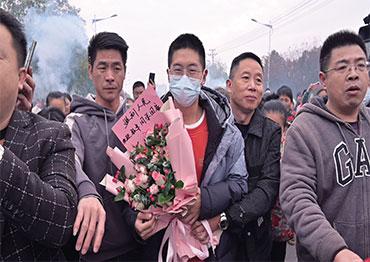
Following the Sun family reunion, CCTV interviewed lawyers about increasing the penalties against buyers of trafficked children. Yu Chong, an associate law professor at the China University of Political Science and Law in Beijing, said that penalties regarding child trafficking generally put the interests of children first, and that lawmakers and judges have to find a balance between cracking down on the crime and protecting children.
 Old Version