Many traditional crafts are disappearing from China. But protecting the country's intangible cultural heritage needs more than good will - it needs commercialization that can make these crafts profitable today, according to an article published by Shanghai-based news portal
The Paper in its Commentary column.
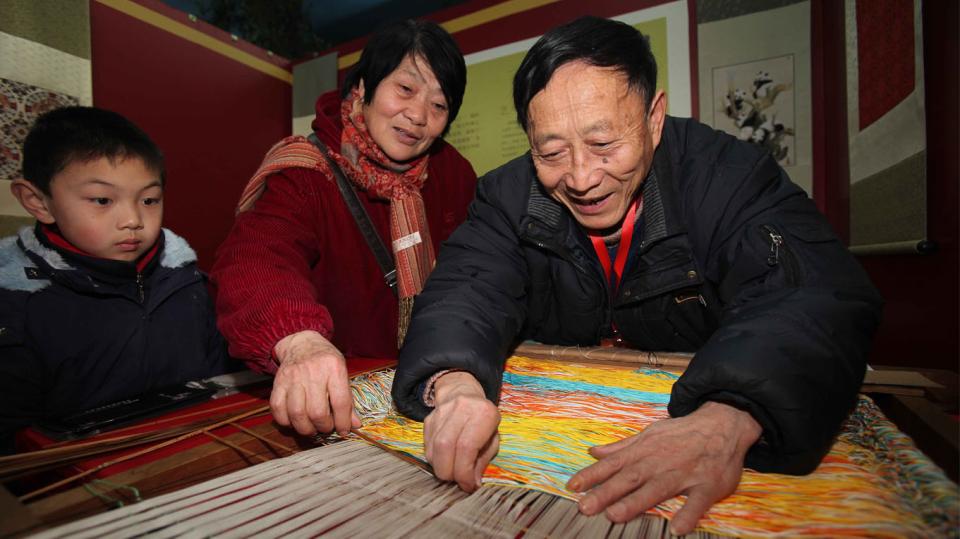
The author, whose name is Luo Xiaohua, says the practice of traditional handicrafts is always fraught with difficulties. First of all, craftsmen usually get disproportionately little rewards for the efforts they devote, causing a huge loss of practitioners, the article said. For example, the traditional art of Sichuan brocade weaving is extremely slow; two weavers working for eight hours produce just 6 to 8 cm of brocade. Even high-earners in the trade make just 3000 to 4000 yuan ($443 to $591) a month.
The handicraft market is also underdeveloped. Although lot of work have been done to promote traditional crafts, ordinary folks are lukewarm about them, even more so toward traditions from other provinces, according to the article. Given this market environment, investors don't want to put money in, and craftsmen can barely make a living.
The article holds that crafts need to be commercialized to break up this vicious cycle. If young craftspeople can sell their goods for a real profit, they can support themselves and have the dignity of a trade. And with this dignity, they won't give up their traditional arts.
“But what is the possible model, as "Made in Yiwu" (a reference to a town famous for cheap, low-quality craft), which has even damaged the inheritance of certain crafts, clearly isn't the answer?" the article asked.
The article argues that the best way to link business and cultural heritage is tourism. For example, to restore Qiang culture, Beichuan, located in southwest China’s Sichuan Province and the country’s only autonomous county for the Qiang ethnic minority, efforts have been made to develop Qiang village tourism, amid other measures, after the 2008 Wenchaun Earthquake took a heavy toll on the county and its culture.
When tourists are about to enter the village, a group of youngsters in splendid Qiang attire line up at the village’s door, singing Qiang songs of welcome for the guests. After tourists have their meals, this same group puts on traditional Qiang performances.
To counter concerns about connecting culture to business, the article contended that “when they are not performing, the youngsters are likely to neither wear the Qiang clothes, nor sing those Qiang songs. Without the chance for performing, wouldn't they lose even those few songs?”
When trying to protect culture, commercialization is absolutely necessary and shouldn't be blamed, the article argues - although it admits that we should avoid over-commercialization too.
 Old Version