China's first nuclear safety law aims to ensure both safety and public scrutiny
China is expected to introduce its first nuclear safety law by the middle of 2017 at the earliest, with a draft submitted on Monday for deliberation by the Standing Committee of the National People’s Congress (NPC), the country’s top legislature.
The draft law focuses on four particular areas, according to China Economic Net, namely the safety of nuclear facilities and materials, the prevention and settlement of nuclear accidents, the safety and health of nuclear personnel and the general public, and environmental well-being.
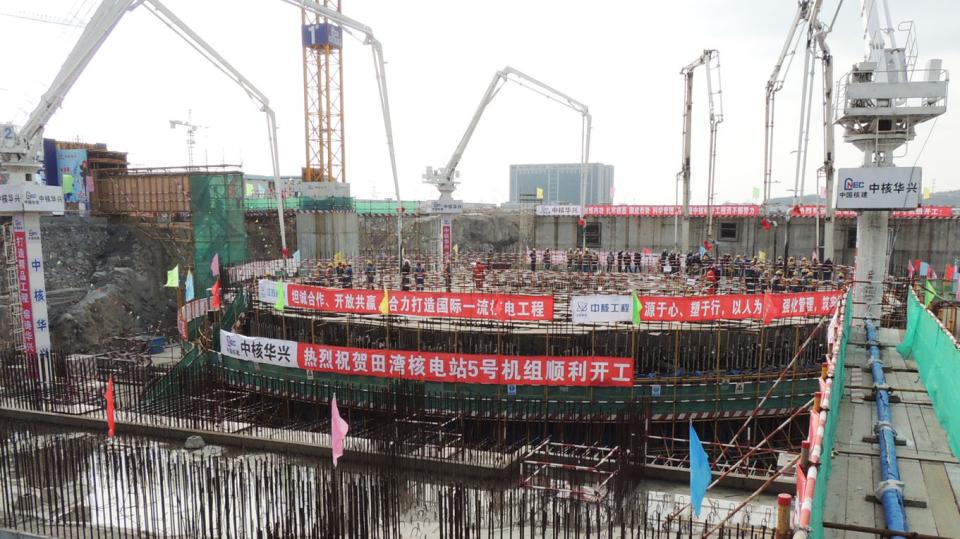
China currently has 31 nuclear reactorsin operation and 23 under construction, according to statistics given to China Economic Net by Zhang Yunchuan, vice-chairman of the Environmental Protection and Resources Conservation Committee of the NPC. The number of China’s reactors is expected to reach 100 by 2020, meaning that around eight units would be built each year, the Shanghai Security News quoted an anonymous industry insider as saying.
Given this scale of development, China will likely overtake France next year to become the world’s second largest user of nuclear power, second only to the US, the Shanghai Security News quoted Hu Liguang, an official with the Department of Nuclear Facility Safety Regulation under the Ministry of Environmental Protection, as saying.
“As a nuclear giant, China is in urgent need of a law to regulate nuclear-related practices. This is not only required by the rule of law, but also a common practice in nuclear development worldwide.” Hu said.
One chapter in the draft law elaborates on provisions to ensure information transparency and public participation, according to Beijing-based legal news portal The Mirror.
For example, citizens and organizations are granted the right to obtain information from the State Council’s nuclear safety regulatory department and local governments. The law also requires nuclear unit operators and local government to collect opinions from all interested parties before a large-scale project is put underway.
To develop from just a big country to a genuinely powerful country in nuclear power, China must guide the public to correctly evaluate the safety of nuclear projects and enhance public supervision,” said Zhang Yunchuan to environmental news website Hbzhan.com.
Yet in terms of professional supervision, the draft is said to still need further improvement. Since China has a rather complicated nuclear safety supervision system, it’ll be particularly difficult for the law to clarify the distribution of powers and responsibilities, according to Shanghai Security News.
“Nuclear safety should be supervised by a department independent of the industry, so that it won’t be restricted by any concerns over economic benefits,” said Hu Liguang.
Since it is neither the direct supervisor of nuclear facilities nor the department responsible for the development of the nuclear industry, the Ministry of Environmental Protection would fully qualify as an independent supervisor, Hu added.
 Old Version