Old Version
Cover Story

Deep Treatments

Chinese scientists and pharma companies are diving into the ocean’s depths to unlock marine life’s potential in developing groundbreaking cancer-fighting drugs

By Wang Yan , Sun Houming Updated Jan.1

With the ocean covering over 70 percent of the planet, life underwater faces harsher competition than on land. Survival takes more than brute strength. It demands innovation.  
In recent decades, scientists have discovered marine organisms that have evolved bioactive compounds capable of combating some of humanity’s greatest threats.  

Kelp is being studied for its potential to fight cancer. Certain algae can target dangerous tumors with laser-like precision. Even crab blood can detect toxins with remarkable accuracy.  

Over 40 marine-sourced drugs and their derivatives have received regulatory approval globally, with more than 150 compounds in clinical or preclinical stages. Experts estimate 90 percent of marine microorganisms remain undiscovered, representing immense potential for drug development.  

On July 1, the sixth meeting of the CPC Central Financial and Economic Commission proposed expanding marine industries, including biomedicine. Along China’s 18,000-kilometer coastline, many coastal regions are pushing to develop related industries. 
 
However, marine drug development in China started relatively late and lacks extensive R&D experience, creating challenges in acquiring resources and translating discoveries into applications. 

Riding the Waves 
Developed over millennia, the unique and diverse bioactive substances of marine organisms are crucial to their survival as species. Lin Houwen, dean of Shanghai Jiao Tong University’s School of Clinical Pharmacy and director of the Marine Drug Innovation and Integration Center, told NewsChina that fierce competition in the deep sea drives microorganisms to evolve strong metabolisms that produce molecules with potent antibacterial, antiviral and cell-damaging effects, providing abundant candidates for new drug R&D.  

Zhang Donghua, deputy secretary of the Party Committee of Ocean University of China’s School of Medicine and Pharmacy, told NewsChina that over 40,000 marine compounds have been discovered globally, with around 60 percent showing drug potential.  

Marine biological resources account for nearly 90 percent of Earth’s total biomass, and key marine natural products have drug potential five times greater than terrestrial organisms.  

“The core value of marine drugs lies in breaking major treatment bottlenecks,” Lin Houwen said. Over the past five years, more than half of global marine drugs entering clinical stages target cancer, and have enormous potential in treating neurodegenerative and metabolic diseases.  

Marine organisms such as sponges, corals, algae and microorganisms show promising cancer-fighting properties. According to researcher Lin Yijun at the Third Institute of Oceanography in Xiamen, Fujian Province, 14 marine drugs have been approved worldwide, with over 50 in clinical trials. Among them, anti-tumor research is a key focus, Lin wrote in a May 2025 article for the Journal of Applied Oceanography.  

China’s marine drug industry began in the 1970s. The 2009 China Marine Materia Medica compiled over 1,500 medicinal marine species. China now hosts the world’s largest marine microbial resource library. The country’s marine drug and biological product industry’s added value rose from 30.2 billion yuan (US$4.2b) in 2015 to 45.1 billion yuan (US$6.3b) in 2020.  

Marine drug research has been formally part of China’s national science and technology development plans since the 1980s, a decade that saw its first modern marine drug developed. 

Guan Huashi, then at Yantai Fisheries School in East China’s Shandong Province, discovered that modified sodium alginate, a byproduct of iodine extraction from kelp, was potentially useful for dissolving blood clots. This led to the creation of propylene glycol alginate sodium sulfate (PSS), an anticoagulant for cardiovascular diseases approved by China’s drug regulator in 1987.  

Guan later served as president of Ocean University of China in Qingdao, Shandong, where he established the National Engineering Research Center for Marine Drugs and the Institute of Marine Drugs. In 2016, he launched the Blue Drug Bank plan, which focuses on innovative marine drug R&D and marine biological resource utilization.  

Over the past decade, multiple government documents have highlighted accelerating the industrial application of marine medicine and biological products. The Blue Drug Bank was named one of the Top 10 Frontier Hotspots in National Marine Science and Technology Research in 2024 by the China National Committee for Terminology in Science and Technology.  

Currently, among nearly 20 marketed global marine innovative drugs, two are independently developed by China. The Blue Drug Bank plan alone is advancing over 40 marine drug projects. 

In 2010, Professor Yu Guangli’s team at Ocean University extracted the anti-tumor agent BG136 from bull kelp, which grows around coasts in the Southern Hemisphere. Subsequent studies confirmed BG136’s strong immune system-boosting effects and potential as a cancer drug.  

In 2022, the BG136 breast cancer drug, developed by Qingdao Marine Biomedical Research Institute, Ocean University and Qingdao Conson Pharmaceutical, was approved by China’s National Medical Products Administration (NMPA) for clinical trials.  

This was the first time seaweed-based compounds were used to help the immune system fight tumors. Following preclinical research, BG136 entered human trials, with Conson Pharmaceutical launching its Phase I trial in September 2025.  

The drug inhibits tumor growth and metastasis by binding to immune cell receptors. During an interview with NewsChina at the company’s headquarters in Qingdao, Conson Pharmaceutical Vice President Chen Yangsheng called the successful launch a potential turning point in cancer treatment.  

Through their research of marine resources, Chinese pharma firms have gained global recognition for cancer treatments using antibody-drug conjugates (ADCs), where antibodies deliver small, powerful drugs directly to tumors.  

Disitamab Vedotin (Aidixi), China’s first original ADC independently developed by RemeGen, a biopharma firm headquartered in Yantai, Shandong, is also the first ADC to receive breakthrough therapy designations from both the US Food and Drug Administration and the NMPA. It was approved for use to treat gastric cancer by the NMPA in 2021.  

In the R&D of traditional Chinese medicine (TCM), over 170 marine-based drugs are in early development, according to the Pharmacopoeia of China, the country’s official compendium of drugs. For example, Haiqishugan Jiaonang is a polysaccharide drug – which uses long sugar molecule chains to target particular conditions. It is extracted mainly from certain species of brown and red algae, and clinical trials have shown its tumor-fighting effects. 
Fishing for New Sources 
While China ranks among the world’s richest in marine biological and genetic resources, even with this abundance, there are still not enough natural compounds available to develop cancer drugs in quantity. Increasing these resources is crucial to boosting production. 
 
Leveraging its Third Institute of Oceanography in Xiamen under the Ministry of Natural Resources, China has built the world’s largest marine microbial resource bank and the country’s largest bank of marine germplasm that can be used to make medicines. Scientists have identified 15,000 samples from marine microbes and collected over 6,000 marine species with potential medicinal value. Notably, more than 700 new deep-sea microbial compounds have been discovered, accounting for over 60 percent of those internationally reported.  

Scarcity of drug sources remains a major hurdle. According to Lin Yijun’s article, China has over 20,000 marine species in total, about 7,500 of which could be used to make medicine. But so far, fewer than 2,000 have been studied.  

Marine biological resources are sparsely distributed, and their tumor-fighting compounds exist at microgram or milligram levels, making large-scale preparation a bottleneck for marine drug development.  

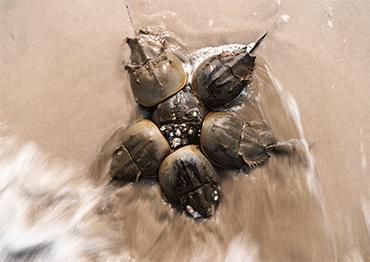
Additionally, the depletion of marine species is hindering research. Horseshoe crabs, for example, produce unique blue blood that coagulates rapidly upon encountering bacteria. Reagents extracted from their blood are widely used in toxin detection and drug R&D.  

But their populations have sharply declined in recent years due to overharvesting for biomedical purposes, habitat loss and degradation, impact of climate change and pollution, earning them national second-class protected status. This has caused shortages of these reagents, delaying many clinical trials. “This is a microcosm of broader constraints in marine drug development,” Lin Houwen said.  

Professor Luo Lianzhong, director of the Xiamen Key Laboratory of Marine Medicinal Natural Products at Xiamen Medical College, told NewsChina that marine plants are easier to obtain and cultivate than animals. However, algae have limited types of active compounds.  

Luo noted that 20th-century marine drug R&D focused on animals such as sponges, corals and filter feeders such as sea squirts. Although these animals produce novel, diverse compounds with great potential for new drugs, they are difficult to harvest and synthesize.  

Moreover, artificial breeding and extraction do not ensure stable drug sources. “Many active substances from marine animals are co-produced by the host and symbiotic microorganisms,” Luo said. Over the past two decades, marine microorganisms, with richer genetic resources and more diverse compounds, have become the main focus for global marine drug discovery.  

Cultivating marine microorganisms requires strictly maintained conditions. Even if done successfully, the desired compounds may remain dormant and yield nothing of pharmacological value. Lin Houwen said that over half of deep-sea microorganisms die during sampling due to sudden pressure changes from deep sea to land. For example, hydrothermal vent microorganisms can only be cultivated by simulating their extremely high-temperature, high-sulfur habitats in the deep ocean.  

Shao Zongze, founder of the China Marine Microbial Resource Preservation and Management Center, told NewsChina that unlike marine flora and fauna, microorganisms can be industrially developed via fermentation, synthesis and other pathways. This helps to scale up production and better enables product development.  

Shao highlighted that AI and big data technologies have greatly improved marine drug screening efficiency. Xu Ximing, deputy director of the Marine Medicine and Health Information Center at the Institute of Marine Drugs, told NewsChina that previous screening relied on blind testing of natural products.  

Today, big data analysis and advanced screening tech let scientists match 3D models of marine compounds with databases of diseases. “It’s like using the right key to unlock a lock,” he said, “and we discovered a small-molecule antiviral drug through this approach.”  

Lin Houwen believes that overcoming the marine drug R&D bottleneck requires accelerating the use of AI and automation, and better domestic deep-sea sampling equipment. For example, Qingdao BGI’s world-first intelligent marine drug discovery platform is fully automated, from sampling to synthesis.  

Many domestic research institutions, according to Zhang Donghua, are setting up marine microbial banks, flora and fauna banks and gene banks, laying the foundation for future drug development. 

Horseshoe crabs spawn on the beach in Dover, Delaware, US, June 11, 2023 (Photo by VCG)

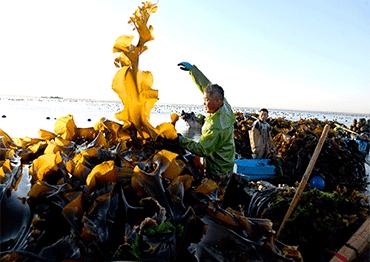
Aquaculture workers gather kelp in the glow of the rising sun at a marine farm in Rongcheng, Weihai, Shandong Province, June 4, 2025 (Photo by VCG)

The marine drug pilot base of Qingdao Conson Pharmaceutical, Qingdao, Shandong Province (Photo Courtesy of Interviewee)

Message in a Bottleneck 
A common modern marine drug R&D approach is to use active molecules as “keys” to identify corresponding targets, then design new drugs around them. Zhang Xiaokun, founding dean of Xiamen University’s School of Pharmaceutical Sciences, said that China leads globally in marine biological resource development and compound discovery.  

While clinically advanced Chinese marine drugs match international standards in compound diversity and target distribution, they are few and far between. “Very few can be successfully transformed into new drugs,” Zhang said.  

In July 2025, Song Ruilin, executive president of the China Pharmaceutical Innovation and Research Development Association, commented on China’s innovative drug landscape: “China’s new drug R&D has reached world-class levels, but challenges persist, including R&D homogenization and a mismatch between industrial capacity and market potential.”  

These challenges also apply to China’s marine drug industry. Lin Houwen noted that China’s lack of success in marine drug R&D stems from insufficient capacity. According to Zhang Donghua of Ocean University, the industrialization rate of domestic marine biomedicine is only 5 percent, far below the 30 percent international average.  

“Most pharmaceutical companies focus on drug indications (what a drug is used to treat) and product layouts (how to produce at high volume), rarely engaging in early-stage marine drug development,” he added.  

Du Guanhua, director of the National Center for Drug Screening, noted that research institutions take the lead in early marine drug exploration, as inland pharma firms lack both proximity to marine resources and interest, while coastal firms focus more on mid- to late-stage development. He told NewsChina that breaking this bottleneck requires researchers to have clear direction and sustained investment.  

Enterprises are a major force in marine drug R&D. Currently, two marine-derived compounds from Zhang Xiaokun’s team have entered Phase I clinical trials, with pharmaceutical companies independently leading the entire R&D process. The anti-tumor marine drug BG136 is a key project under the Blue Drug Bank initiative.  

Marine drugs show little short-term commercial payoff, reducing local governments’ motivation for sustained support. Poor resource sharing between regions also hinders R&D. Research institutions have limited resource sharing, mainly due to the lack of a common non-profit data and resource platform. Chen Yangsheng noted that establishing national-level gene data and microbial strain resource centers, similar to the US National Center for Biotechnology Information and the American Type Culture Collection, would greatly boost R&D efficiency. He added that most early research funding comes from local governments, leaving companies like Conson Pharmaceutical facing administrative and policy barriers when promoting drug candidates outside its home province of Shandong.  

Du Guanhua argued that spontaneous inter-regional exchanges in early-stage marine drug R&D can partly prevent redundant investment, foster regional characteristics and create synergy. Yet, launching multiple new marine drugs still requires national-level planning and coordination.  

Du has participated in programs such as China’s national high-tech R&D program 863 and the National Science and Technology Major Project for “Major New Drug Innovation.” He noted that while hundreds of billions of yuan in special funds have been poured into China’s innovative drug R&D system, marine drugs have never been a key focus. He proposes establishing a national-level marine drug industry development innovation center supported by policy and finance to attract enterprises and research institutions.  

Luo Liangzhong said that the global biomedicine industry’s rapid development has largely benefited from foundational major science programs like the international Human Genome Project. He added that breakthroughs in marine drugs also require sustained, stable national-level support.  

Marine drug R&D and marketing requires multiple agencies working together, from marine affairs and healthcare to drug supervision and medical insurance, according to Zhang Donghua. “A single department cannot drive systematic breakthroughs. Higher-level institutional coordination and national unified planning are needed,” he said.

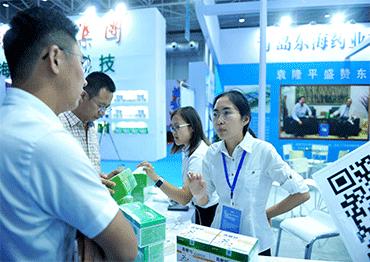
Visitors learn about domestically produced marine pharmaceuticals at the East Asia Commodities Fair held in Qingdao, Shandong Province, September 5, 2018 (Photo by VCG)

Print