China News Service: How did your research begin on Robert Jacquinot de Besange? What did he do in Shanghai?
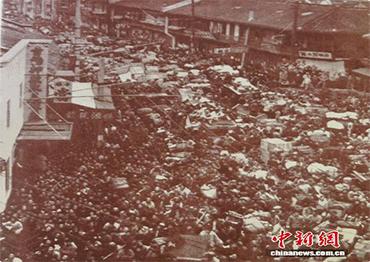
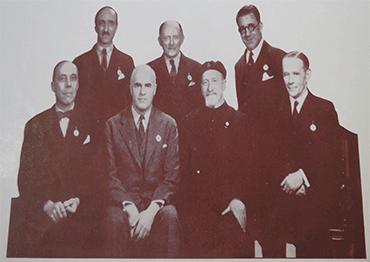
Su Zhiliang: I read about Jacquinot around 20 years ago. This French priest came to Shanghai as a missionary in 1913. Amid fierce fighting between Chinese and Japanese forces, he persuaded both sides to set up the Nanshi Safety Zone in Shanghai’s former Nanshi District between Fangbang Road and Minguo Road. On the first day it was established, he designated the City God Temple, Yu Garden and Xiaoshijie Amusement Park as well as schools and churches as shelters, which immediately accommodated over 20,000 refugees. With the later influx of refugees, the zone at its peak housed around 130 camps and over 200,000 refugees. This neutral sanctuary continued to exist until June 1940, protecting around 300,000 Chinese refugees. This Frenchman thus became known as a friend of China, and was even hailed by refugees as the “Foreign City God.”
What captivates me most about Jacquinot is his compassionate dedication – a great love that transcends nationality, race and religion. With his wisdom, tenacity and skill, he made the refugee zone possible.
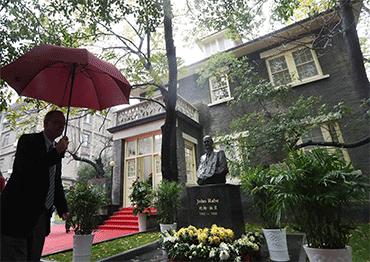
While the experience of German businessman John Rabe has been widely known in recent years for his international humanitarian actions during the Nanjing Massacre, Jacquinot, the Frenchman who saved countless Chinese lives before him, remains much less known, and could thus be called a “forgotten hero.” We hope to reveal this part of history.
In 2013, I commissioned my graduate student Wang Hai’ou to conduct research and search for historical materials. Along with Chen Bin and other students, she was able to contact 10 refugees. Our new book, Jacquinot: The Forgotten Hero, was published in August 2025. Through digging into archives home and abroad, eyewitness accounts, historical documents and rare photographs, it is a comprehensive account of daily life within the refugee safety zone and Jacquinot’s legendary life.
CNS: What new findings does the book reveal?
SZ: Inspired by Jacquinot's establishment of the Nanshi Safety Zone, Rabe planned to set up a similar international safety zone in Nanjing and requested assistance from this Frenchman. We also found that Jacquinot, as the head of multiple charitable organizations and chaplain to the Shanghai Volunteer Corps, was highly renowned at the time. Yet decades later, most people learned about Jacquinot from the diaries of John Rabe, which mentioned him a couple of times.
The biggest challenge in presenting Jacquinot’s life anew was gathering materials and revealing historical details. Over more than 20 years of research, we gathered extensive archives, newspapers and magazines, photographs and footage from home and abroad, accumulating a wealth of primary materials.
When we set out to write this new work, we combined eyewitness accounts with historical records. We strived to display Jacquinot’s humanitarianism and selfless dedication during the war, as well as his profound concern for Chinese refugees. For instance, Jacquinot said he always had candy in his pocket. When he saw children crying, he would offer them two candies, and comfort them by saying “don’t cry” in Shanghainese. There are files showing that during the bitter winters, Jacquinot asked International Refugee Committee staff to pack hot meals in thick paper bags, wrap them in cotton wadding [used for quilts] and then packed them into wooden barrels so the refugees could eat warm food.
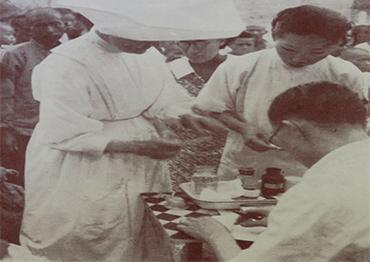
According to accounts by war survivors who lived in the refugee zone, Jacquinot would go to the zone every morning. People in the zone could still sleep amid the rumble of gunfire outside the zone. Food, medicine and sometimes bread was handed out regularly. There were hospitals, schools, nursing homes, factories and personnel maintaining order – almost a small society.
Our new book also reveals how Jacquinot continued his refugee relief work after returning to France, as well as his humanitarian efforts to aid the German people after WWII.
CNS: How can these efforts to recount and spread Jacquinot’s story influence exchanges between China and France?
SZ: I see it as a beautiful chapter in the history of the China-French friendship, which is almost forgotten. Shanghai once organized a delegation to visit Jacquinot’s hometown, the small city of Saintes in western France, to trace his personal life. Regrettably, residents of Saintes, located hundreds of kilometers from Paris, didn’t even know about Jacquinot and his great deeds.
Nevertheless, the delegation found the apartment where Jacquinot was born, as well as the one he lived in after returning from China. They also found some archival materials with detailed information about Jacquinot and Shanghai’s Nanshi Safety Zone, including two photographs of the refugee zone taken by Jacquinot himself.
The delegation also found Jacquinot’s birth documents preserved in the city’s municipal archives, including his birth certificate and family members’ information. It turned out that Jacquinot’s family had no descendants. That’s why this name was gradually forgotten and faded into obscurity.
In fact, Jacquinot had his own unique considerations when he selected the safety zone’s location. He chose an area in Nanshi which was close to the French Concession. For contingencies, Jacquinot could conveniently contact the French Concession [authorities] for assistance.
In August, I initiated a campaign with Xu Bo, chairman of the Friends of Wu Jianmin association, seeking descendants of the 300,000 refugees who sought shelter in the Nanshi Safety Zone. We hope to invite some representatives to join us at a seminar dedicated to Jacquinot scheduled for November 2025 in France. We hope Jacquinot’s story can be told not only in Shanghai, but also in France and across the world, and that the descendants of the refugees he protected could become ambassadors of friendship between China and France.
CNS: How could Jacquinot’s story help us better understand WWII history?
SZ: As a model of successful refugee protection during WWII, Jacquinot’s extraordinary journey reveals to people today a moving facet of history, as well as the international significance of China’s War of Resistance against Japanese Aggression.
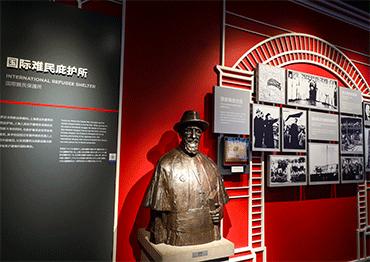
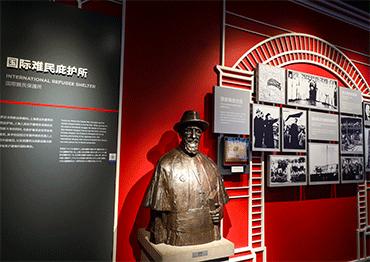
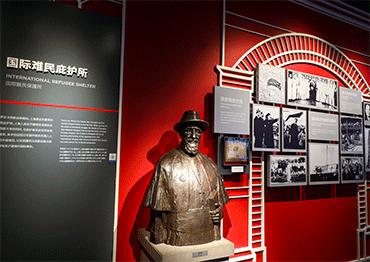
The story of the Nanshi Safety Zone in Shanghai is a vivid example of China and the world jointly resisting aggressors and promoting global civilization. Today, a monument commemorating the Nanshi Safety Zone stands beside the gate of the City God Temple, and a statue of Jacquinot is on display at the Memorial Hall for Shanghai Songhu War of Resistance against Japanese Aggression.
On September 3, 2024, United Nations Secretary-General António Guterres visited Shanghai, where he paid tribute to Jacquinot and the Jacquinot Safe Zone [at the City God Temple]. I look forward to the early establishment of a memorial hall for the Nanshi Safety Zone in Shanghai, and production of a movie to tell this story.
CNS: What is the practical significance of remembering and retelling Jacquinot’s story?
SZ: The Nanshi Safety Zone in Shanghai during WWII was regarded as an outstanding wartime refugee sanctuary. It garnered significant attention from the International Red Cross, which continuously sent people to Shanghai to learn about the zone’s ideas and operational mechanisms. This “Shanghai Model” was later adopted in Nanjing, Hankou [Wuhan], Guangzhou, and even in France and Germany.
It also inspired the international humanitarian law – the 1949 Geneva Convention (IV) on Civilians, which is a comprehensive code for international humanitarian law on protecting victims of war or armed conflict. Today, these laws are widely accepted by the international community, with 196 countries having ratified the Convention. The concept of safety zones is now universally adopted, and the United Nations Security Council recommends and authorizes their establishment to safeguard civilians during wartime.
 Old Version