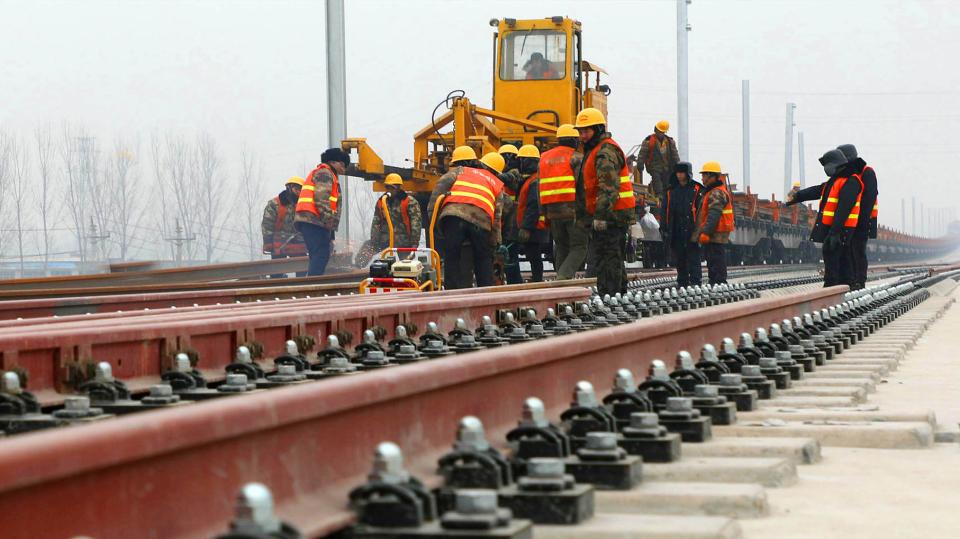
China’s top economic planner, the National Reform and Development Commission (NRDC), has approved over 1.2 trillion yuan (US$177.5 billion) in major infrastructure projects ranging from airports to railway since the start of the fourth quarter of 2018, reported newspaper
Economic Daily.
Liu Xuezhi, senior researcher at the Center for Financial Studies with the Bank of Communications, told the paper that the projects arrive as downward pressure mounts on China��s economic growth. Increased infrastructure projects mean more investment, which still plays an important role in the economy.
But the country is not pursuing another infrastructure-driven stimulus policy, Liu said. Instead, it’s seeking quality investment. The approved projects focus on shoring up weak links in the country’s infrastructure. He added that developing infrastructure also helps narrow the development gaps between regions.
Aside from bank loans, the capital market, fiscal support and private capital should also fund the projects, said Liu Ying, senior researcher from Chongyang Institute for Financial Studies, Renmin University of China. One way is to advance public-private partnership projects, and the other is to encourage companies to invest in infrastructure directly by removing unreasonable market access.
The NRDC stressed the need to prevent local governments’ debt risks during project approvals, the newspaper reported. Given the existing heavy debt of some local governments and the consequences of runaway debt, Liu of Chongyang underlined the importance of risk prevention. He predicted there will be greater supervision and regulation over local government debt in 2019 that is supposed to be “controllable, orderly and proper” so that fiscal policies stabilize the country’s growth.
BIUCX↑↓✎
 Old Version