With e-commerce market booming in China, the eastern city of Hangzhou, where online trade giant Alibaba is headquartered, has seen a flood of cases on disputes arising from such transactions. In response, the city has not only come up with its own orders for electronic payment, but also set up online courts to facilitate settlement, reported Shanghai-based news portal
The Paper on December 27.
The Civil Procedure Law of China stipulates that in a debt dispute, the creditor can apply for a payment order from the court, and, if the debtor involved neither pays the debt nor raises an objection within 15 days upon receiving the order, the creditor can appeal to the court for the order's execution.
An Internet-based version of the procedure allows for all the steps to be carried out online, including application for a payment order, reviewing, delivery, and so on, according to Chen Liaomin, vice-president of People’s Court of Xihu District.
“In fact, this Internet-based procedure is markedly more efficient than the usual proceeding,” Chen said. For example, in May 2015, Chen’s court issued its first electronic payment order, and “the whole process, from the creditor applying for an order to the judge issuing it, took less than five hours.” This procedure helps courts handle such cases more efficiently, and is thus an blessing for the usually short-handed courts, Chen added.
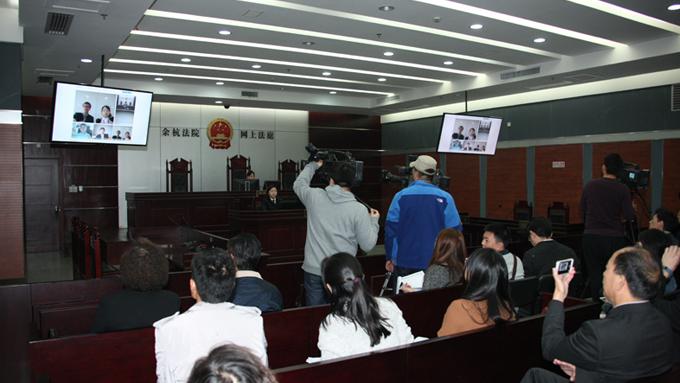
Hangzhou also set up online courts to specifically address the increasing number of cases related to e-commerce transactions. “We intend to make (e-commerce-related) litigation as efficient and speedy as online shopping,” said Shao Jingteng, vice-president of Hangzhou Intermediate People’s Court.
After the e-commerce courts came online in August 2015, the whole process of a lawsuit - from putting on record, court trial, to execution – has become entirely Internet-based, with every step taken by the litigant participant being recorded automatically, according to Shao. By far, a total of 1,452 cases have been tried by these courts.
If such cases, which are usually cross-regional but involve small sums, were brought under normal judicial proceedings, the parties involved might end up paying more in travel expenses than the cases were worth, Shao said.
 Old Version