moved to China’s tropical province of Hainan over a year ago, and I hate to admit it took me that long to try one of the island’s tastiest local traditions.
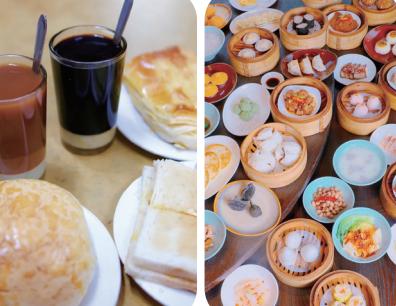
Locals here love something called laobacha, or “old dad’s tea,” if you want the literal translation. The easiest way to describe it is a chill dim sum for people with bigger appetites.
In Hainan, going for laobacha means settling in for a long, leisurely meal centered on tea, snacks and small plates. That is much like dim sum, but the two are very different cultural experiences. One is a relaxed, everyday Hainanese social ritual, while the other is an elegant Cantonese culinary tradition. Both pair tea with small bites, but their origins, food, atmosphere and purpose differ sharply.
Dim sum, which means “touch the heart” in Cantonese, is a refined tradition. Originating over a thousand years ago along the Silk Road, it later developed in the teahouses of what is now Guangdong Province as light refreshments for travelers. Today, it’s typically a formal brunch or lunch featuring delicate, bite-sized dishes served in bamboo steamers. If you’ve ever had dim sum, you’ve probably tried classics like shrimp dumplings, barbecue pork buns or egg tarts. These are timeless staples for a reason.
Back in the day, dim sum restaurants were famous for their rolling carts, which circulated around the dining room as you picked dishes on the spot. Over time, as dim sum became more upscale, these carts gradually disappeared from many higher-end establishments. Personally, I think that’s a shame. The anticipation of what might be in the next trolley was always my favorite part as a kid.
Laobacha, on the other hand, is a laid-back Hainanese custom shaped by overseas Chinese returning from Southeast Asia. The name says it all: older men gathering to drink tea and swap neighborhood gossip. Unlike dim sum’s refinement, laobacha is rustic, typically served in simple teahouses or open-air stalls from morning through late afternoon.
The food is hearty, affordable and filling. Hainanese noodles, chicken feet, braised pork ribs, coconut pastries and old-salt lemon tea are just a few local favorites. Here, the focus is on satisfying flavors rather than delicate presentation. The atmosphere is casual and communal, and it’s not unusual for people to linger for hours. Prices have stayed relatively low over the years, making laobacha an accessible treat for people from all walks of life.
At its core, the difference comes down to spirit. Dim sum is a culinary art form where the food takes center stage.
Laobacha is a social ritual, with food as a supporting player. Both celebrate tea and community, but one delivers Cantonese elegance in small, perfect bites, while the other offers Hainanese warmth in generous, no-frills comfort.
Either way, you can’t go wrong. Do yourself a favor and try both, in the name of “cultural research.”
 Old Version